
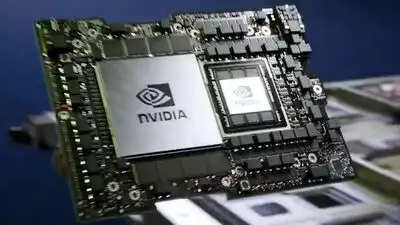
OpenAI recently introduced its first custom artificial intelligence (AI) processor, dubbed Jalapeño, marking a major move by the ChatGPT-maker to develop in-house silicon and mounting new pressure on Nvidia’s near-monopoly over advanced AI computing hardware. The custom-built inference semiconductor is claimed to deliver industry-leading speed and operational efficiency, positioning OpenAI alongside tech titans like Google, Amazon Web Services (AWS), Microsoft and Meta in engineering proprietary chips to power massive artificial intelligence systems.
OpenAI to Deploy Jalapeño Processor for Enhanced Inference Tasks
OpenAI has announced plans to implement its newly developed Jalapeño processor across its computing infrastructure by the end of this year. This processor, created in collaboration with Broadcom, is specifically designed for inference tasks, which involve executing trained models and processing user queries. Engineering teams are already working on subsequent generations of the Jalapeño processor to further enhance its capabilities.
How Jalapeño stacks up against Nvidia hardware While Nvidia’s market valuation has soared throughout the global data centre expansion due to increasing demand for its GPUs across model training and day-to-day inference. Because jalapeño incorporates next-generation HBM4 memory, making Nvidia’s forthcoming Rubin platform a more accurate peer comparison, for example, analysts noted that the direct comparison to Blackwell is somewhat asymmetric. TrendForce analyst Fion Chiu observed that while Jalapeño will decrease OpenAI’s reliance on Nvidia for daily inference tasks, Nvidia’s GPUs will remain indispensable for large-scale model training and frontier AI workloads due to their flexible programmability and established CUDA software ecosystem.
However, market analysts warn that the rapid emergence of hyperscaler-designed silicon presents a growing threat to Nvidia’s long-term dominance, particularly within the fast-growing inference market. Evaluating the chip’s performance inside OpenAI’s development facilities, independent research firm SemiAnalysis noted that Jalapeño surpassed Nvidia’s Blackwell architecture in performance per watt across nearly every testing benchmark.
Anthropic committed over $100 billion over the next decade toward AWS infrastructure, including Amazon’s proprietary Trainium processors. Tech industry’s shift toward custom chips OpenAI’s silicon debut reflects an accelerating transition across Big Tech to deploy custom application-specific integrated circuits (ASICs). First to the party was Google with its TPU expansion, Google continues to roll out next-generation Tensor Processing Units (TPUs) across its cloud network for both model training and live inference. Meta joined the fray after it formalised agreements to deploy one gigawatt of Broadcom-engineered custom AI processors as part of a multi-GW infrastructure plan. Meanwhile, emerging chipmakers such as Cerebras, SambaNova, D-Matrix, Etched and Fractile are similarly advancing specialised AI accelerators. Get the latest technology news and updates. Download the TOI App.