
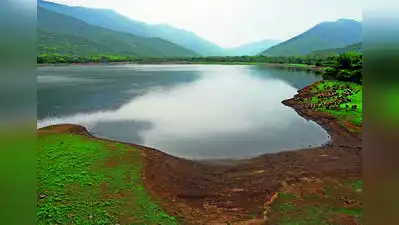
Mettur dam
With the state’s groundwater crisis worsening — data showing a decline in almost every district — and the legislation meant to fix it still awaiting the governor’s nod, farmers in Tamil Nadu ’s delta region are looking forward to the opening of the Mettur dam sluices on Sept 1. Piezometer readings from the State Ground and Surface Water Resources Data Centre show that groundwater levels fell in 35 of Tamil Nadu’s 38 districts in July compared with the same month last year. “Borewells are being drilled up to 2,000ft. The proposed law would repeal the Chennai Metropolitan Area Groundwater Regulation Act, 1987, and provide a uniform regulatory framework across Tamil Nadu. Tamil Nadu’s earlier groundwater legislation, the Groundwater (Development and Management) Act, 2003, was repealed in 2013. A 2014 govt order regulates groundwater extraction through a mandatory no-objection certificate and licensing system.
“Extraction continues without regulation,” says Duraimurugan, DMK general secretary and former water resources minister. Meanwhile, the Tamil Nadu Water Resources (Regulation, Management and Augmentation) Bill, passed by the DMK-led assembly in Jan as a comprehensive legislation, is still awaiting assent from Lok Bhavan. It was against this backdrop that our govt decided to bring in legislation to regulate, manage and augment state’s water resources. The bill provides for the establishment of a Tamil Nadu Water Resources Management Authority and district-level committees. It also proposes state and district water resources management plans, interlinking of rivers, tanks and other water bodies to store excess floodwater, prevention of water pollution, regulation of commercial water users, a tariff on water abstraction and measures for flood management. It includes penalties for violations. It prohibits water-based industries in over-exploited and critical blocks, restricts extraction by highly polluting industries near major rivers and within 10km of the coast, and requires certain infrastructure projects and water-based industries for clearance. It also mandates rainwater harvesting and artificial recharge measures to protect groundwater reserves.
Because of a lack of support from beneficiaries, policy makers say a Union govt initiative launched a decade ago to promote artificial groundwater recharge, including 100% subsidy for small and marginal farmers, could not make an impact. The state ground and surface water resources wing’s role is limited to recommending recharge structures, conducting scientific assessments for borewells, analysing water quality in observation wells and issuing no-objection certificates, apart from periodically assessing groundwater levels.