
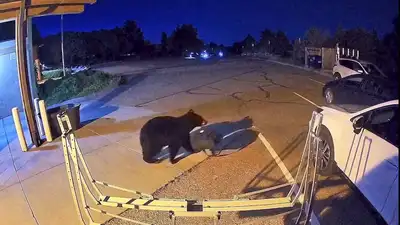
A bear walks out holding an object after sneaking into a fire station in Colorado Springs, Colorado, US
Over the past 50 years, Colorado’s population has more than doubled, pushing housing developments into wildlife corridors and feeding areas around mountain communities such as Vail and Colorado Springs. State wildlife officials estimate that Colorado is now home to between 17,000 and 20,000 black bears, making them one of the healthiest bear populations among the world’s eight bear species. Jonathan Livingston, a spokesperson for Colorado Parks and Wildlife, told Reuters that between 1.5 per cent and 2 per cent of reported sightings end with a bear being euthanised. But these food sources can bring residents face-to-face with black bears weighing between 200 and 400 pounds and carrying three-to-four-inch claws.
Livingston said early reports from residents give wildlife officers the best chance of scaring bears away with non-lethal methods before the animals learn to depend on human buildings and food. Heather Reich, a Nevada bear expert and former wildlife agency officer, said she is deeply concerned about what could happen in the coming months as bears search more aggressively for food. It’s going to be Armageddon,” Reich told Reuters.
The environmental crisis is happening alongside major population growth across the region. At the same time, black bear numbers have recovered across much of the West after the animals were almost wiped out in some areas a century ago. The combination of more bears, expanding towns and shrinking natural food supplies has increased conflicts between people and wildlife. Colorado has recorded at least six direct bear attacks on people this year. The increase in encounters can have deadly results for bears. Hundreds of bears across Western states are being shot, electrocuted or euthanised after entering residential areas. State authorities generally remove and kill bears that enter occupied homes or show aggressive behaviour towards people. Many encounters begin with simple problems, such as unlocked rubbish bins or bird feeders left outside. Community conservation groups, including the Colorado Bear Coalition, are calling on local authorities to introduce stronger rules requiring bear-resistant rubbish containers. Field biologists warn that the problem could become worse as autumn approaches and bears enter hyperphagia, a period of intense eating when they consume large amounts of food to build fat reserves before winter hibernation. “We can’t imagine how September and October will look.