
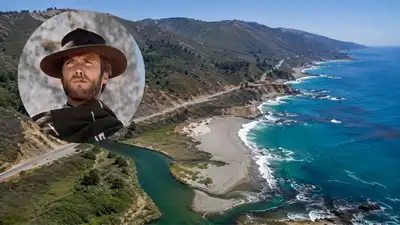
In 1995, actor and filmmaker Clint Eastwood sold roughly 280 acres of his California coastal property to Monterey County for $3.08 million, helping ensure that a large stretch of scenic land would remain undeveloped. The property, associated with Eastwood’s long-held Malpaso holdings near Carmel Highlands, was divided into five parcels and was acquired by the county for open-space preservation. Rather than becoming available for future construction, the land was placed under a conservation easement intended to protect it permanently. The transaction formed part of a wider conservation effort around Carmel and the Carmel River, where several important coastal properties were facing development pressure. Eastwood’s role in the episode was more complicated than a simple donation, since the county purchased the land, but the resulting protection prevented its future development.
In 1997, Eastwood and Maggie Johnson announced an arrangement involving the transfer of substantial Coast Ranch land to the Big Sur Land Trust. Contemporary reports valued the property involved at about $6 million and said the arrangement would keep most of the land from being developed. The conservation story did not end with the Malpaso transaction. The deal included restrictions affecting development rights and helped preserve open space around the Carmel River. The preservation effort also involved Monterey County land retained for flood-control purposes and agricultural protections on other portions of the property.
Development plans had proposed dozens of homes on the approximately 134-acre property. Eastwood did not simply give the roughly 280 acres to Monterey County for free. The county paid $3.08 million to acquire the five parcels, with Proposition 70 funding playing a role in the open-space acquisition. Roughly 279 to 280 acres were sold for $3.08 million and placed under permanent conservation protection, ensuring that the land would not follow the conventional path from private ownership to subdivision and construction.
Because it was intertwined with the preservation of the nearby Odello Ranch, a former artichoke-growing property at the mouth of the Carmel River, the 1995 Malpaso sale was particularly important. The strongest legacy of the transaction is therefore not simply that a Hollywood star owned a large piece of California. The Eastwoods subsequently became involved in the complicated effort surrounding the site, purchasing the property after a development option was abandoned. The episode eventually helped lead to the preservation of much of the land rather than the residential development originally contemplated. The distinction between a sale and a donation is central to telling the story accurately. What makes the episode a conservation story is what happened through and after that purchase. The land was acquired for preservation and subjected to a permanent conservation restriction, removing the possibility of ordinary future development. It is that a substantial portion of his Malpaso property changed hands through a public conservation purchase at a time when development pressure was affecting the Carmel coast. The surrounding transactions were financially and politically complicated, but the central conservation outcome remains clear. A large area of environmentally and scenically important coastal land was secured as protected open space rather than developed.
Pingback: When actor Clint Eastwood bought a 134-acre former artichoke farm near California’s Carmel