
Technology must move beyond digital learning to reshape institutions, with AI, interdisciplinary education and human-centred teaching emerging as pillars of future-ready campuses.
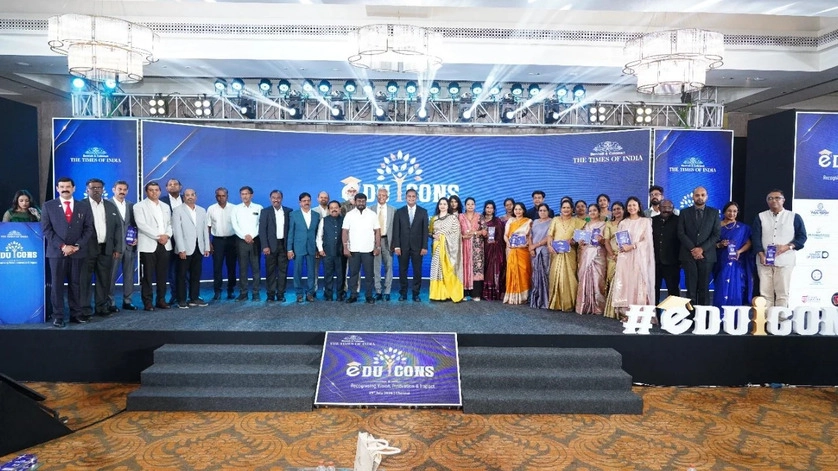
These perspectives dominated ‘Beyond Smart Classrooms: Technology Driving Institutional Excellence,’ a panel discussion held as part of ‘Edu Icons 2026,’ a Times of India initiative that recognised outstanding educators, academic leaders and institutions. The makers of tomorrow The Times of India’s ‘Edu Icons 2026’ honours institutions and academic leaders across Tamil Nadu for their contribution to learning, innovation and student development. The Times of India hosted Edu Icons 2026 to honour 30 distinguished contributors from the education sector, bringing together representatives from schools, higher education institutions, professional colleges and training organisations.
Panellists said institutions must therefore teach students to use these technologies responsibly and critically.
Educational institutions need to rethink teaching and learning to remain relevant in the age of artificial intelligence (AI), education leaders said at a panel discussion organised by The Times of India. AI should be used as a starting point for research and analysis, not followed blindly,” he said. “There is a need to move beyond theory and give students greater exposure to practical and application-oriented learning,” said Jayaprakash Gandhi. “If I had to choose between a student with outstanding academic qualifications and another with exceptional problem-solving ability, I would choose the latter,” said V M Muralidharan. “Skill sets have to become an integral part of the curriculum if education is to remain relevant,” he added. Such approaches, they said, would better prepare students for complex real-world challenges. Summing up, Srinivasan said educational institutions could no longer afford incremental change.
research and administration, panellists stressed that its role should be to enhance education rather than replace the human qualities central to learning While technology is transforming teaching. Tamil Nadu Minister for School Education, Tamil Development, Information and Publicity A Rajamohan attended as chief guest. Moderated by Kalaimamani Anil Srinivasan, founder of KRUU and professor of practice at Krea University, the discussion featured Indranath Gupta, dean of SRM School of Law; V M Muralidharan, chairman of Ethiraj College for Women and chairman of ALERT NGO; and Jayaprakash Gandhi, career consultant and educationist. AI as an enabler The panellists agreed that AI is transforming education by accelerating research, streamlining administration and supporting teaching. However, they cautioned that technology should complement academic judgement rather than replace it. Indranath Gupta noted that while the fundamentals of law remain unchanged, technology has dramatically improved research speed and access to information. “The fundamentals still remain the same, but the entire process has become much faster. He also urged institutions to adopt emerging technologies thoughtfully while assessing their long-term impact. The discussion noted that campuses have evolved considerably since the pandemic accelerated digital adoption. Higher education has moved beyond online classrooms, with AI-powered learning, digital governance and data-driven decision-making becoming integral to institutional strategy. Reimagining higher education As technology reshapes industries, higher education must evolve with changing workforce expectations. Theoretical instruction alone will no longer be enough. Greater emphasis is needed on experiential learning, interdisciplinary education and stronger industry engagement. He added that colleges must ensure graduates develop skills relevant to an increasingly dynamic employment landscape. The discussion also highlighted changing student behaviour. During audience interaction, participants acknowledged that AI-powered tools are already part of their academic work and everyday conversations. Skills over qualifications A recurring theme was that employability will increasingly depend on adaptability, critical thinking and problem-solving rather than academic credentials alone. The human factor Despite rapid advances in AI, the discussion concluded that empathy, creativity, ethical judgement and emotional intelligence remain qualities technology cannot replicate. The panellists advocated greater collaboration between disciplines and institutions, project-based learning and flexible academic models combining classroom teaching with industry projects and remote learning. “Creativity is the central force of education. Modularity, interdisciplinary learning, project-based education and collaboration must become part of institutional policy if we are to prepare students for the future,” he added. As AI reshapes higher education, the campuses best prepared for the future will not necessarily be those with the most sophisticated technology, but those that use it to foster curiosity, innovation, adaptability and lifelong learning. The event also served as a platform to discuss education reforms, institutional excellence and the sector’s evolving priorities. Education remains a key driver of Tamil Nadu’s social and economic progress. Focus on reform
Recalling the 2003 Kumbakonam school fire tragedy, the minister said the incident marked a turning point in efforts to improve safety standards and educational infrastructure.
Rajamohan said the government had focused on long-term reforms aimed at strengthening public trust and improving governance. Addressing systemic shortcomings, he said, remains essential to building a more effective and transparent education system. Rajamohan also said technology-driven governance has improved transparency within the education department. S Sriram of Sri Ramakrishna Institute of Paramedical Sciences said institutions must remain aligned with industry requirements while improving learning outcomes. P Krishna Kumar of Nehru Group of Institutions said institutions carry broader responsibilities in preparing students for the future and responding to changing societal needs. M Sivaprakasam of Universal Group of Institutions said the organisation has worked to make education accessible to students from varied backgrounds. Representatives said the recognition affirmed their commitment to academic excellence and student development while encouraging continued innovation. Edu Icons, they said, not only celebrates excellence but also encourages knowledge sharing and collaboration across institutions, helping educators respond to the changing needs of students and society.
He highlighted the importance of creating an environment where every child can realise their potential. Complaints are digitised, categorised and monitored regularly to ensure timely resolution, helping restore public confidence in addressing long-pending grievances. He also highlighted efforts to make education more inclusive, including initiatives supporting children with autism and other special needs. The administration plans to strengthen the midday meal scheme, continue providing laptops and learning aids, upgrade classroom infrastructure and expand STEM education while giving equal importance to humanities. Adapting to change The event highlighted the evolving role of institutions in preparing students for a rapidly changing world. S Manivannan of Vani Vidyalaya School noted that strengthening education is a collective responsibility. K Chandrasekaran of Santhanam Vidhyalaya Senior Secondary School emphasised engaging learning environments and students’ overall development. M Praveena of Sri Sai Ranganathan Engineering College highlighted experiential learning through incubation centres, entrepreneurship programmes and industry-linked training. Shared commitment Representatives across disciplines shared the view that innovation, collaboration and student-centred learning are central to educational progress. AR R Raammnath of DOT School highlighted design education and skill development, while S Bharath of Veranda Race pointed to the growing need for structured training that improves employability and career readiness. Pushpalatha Poornam of Pushpalatha Educational Centre emphasised holistic development, saying institutions must nurture intellectual, social, physical and spiritual growth. They also identified common challenges, including preparing students for emerging careers, strengthening industry collaboration and creating inclusive learning environments. Disclaimer – The above content is non-editorial, and TIL hereby disclaims any and all warranties, expressed or implied, relating to it, and does not guarantee, vouch for or necessarily endorse any of the content. Get the latest technology news and updates. Download the TOI App.
Education today extends beyond academic achievement, with institutions expected to develop practical skills, adaptability and values.