
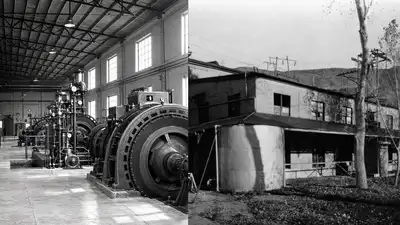
Image: Left/Interior of Childs power plant/(Wikipedia)/Right/Childs power plant(APS Childs-Irving Collection)
In 1909, engineers completed the Childs Plant, part of the Childs-Irving Hydroelectric Project near the Verde River, harnessing the dramatic drop in elevation of Fossil Creek to generate electricity.
The project eventually became an important source of electricity for Arizona and was later recognised as an ASME Historic Mechanical Engineering Landmark, according to the Engineering and Technology History Wiki (ETHW). In the rugged mountains of central Arizona, building a hydroelectric plant in the early 20th century meant overcoming obstacles that modern construction crews rarely face. The terrain was so difficult that mule teams had to carry construction materials up the mountains, forcing engineers to rethink how parts of the project could be built and connected. The Childs Plant used three Pelton-wheel generators and demonstrated how hydroelectric technology could be adapted to an exceptionally challenging landscape. What began as an ambitious engineering project ultimately helped supply the entire electric demand of Yavapai County.
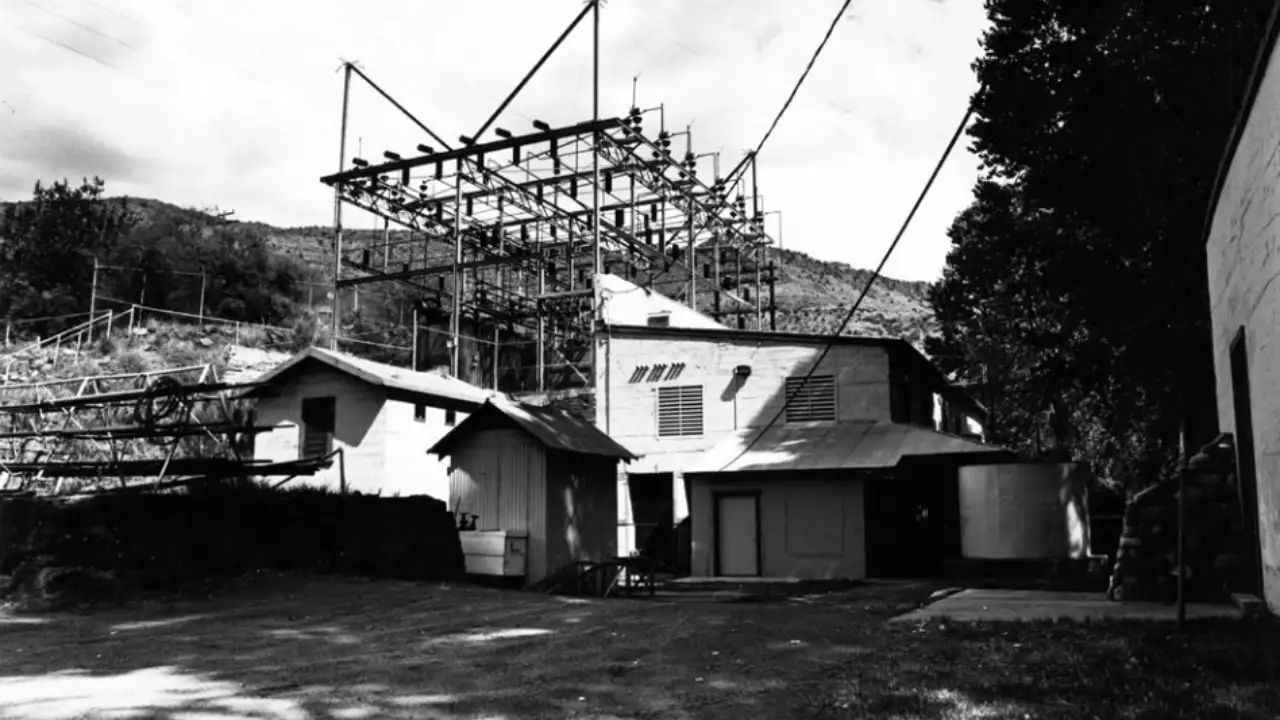
Mule teams carried construction materials up the mountains, according to ETHW’s account of the project. The construction story reveals just how different major engineering projects were before modern roads, heavy trucks and helicopters transformed remote construction. The Childs-Irving project occupied mountainous terrain where simply getting materials to the right location was itself an engineering problem. The difficulty influenced the design of the electrical transmission system, with engineers using steel towers instead of wooden poles. The system effectively turned the landscape’s natural elevation into a source of mechanical and electrical power.
The project also required a seven-mile series of flumes to bring water from a dam below Fossil Spring towards the Irving Plant, before the water continued towards the Childs Plant’s penstocks.