
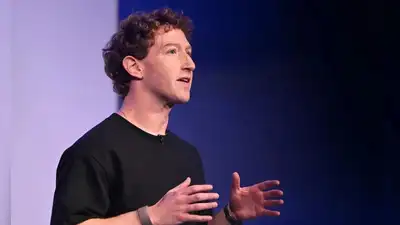
Meta CEO Mark Zuckerberg recently engaged in a private phone conversation with former President Donald Trump, during which he expressed opposition to a proposed plan that would require rigorous safety checks for America’s most powerful artificial intelligence (AI) models before their public release. This discussion took place in the week of August 17, as reported by Politico and Business Insider, citing a senior White House official familiar with the matter. Notably, Trump initiated the call to Zuckerberg.
His version starts voluntary: labs hand over models up to 30 days ahead of launch for testing on cyber, biological and deception risks. Hassabis sees a 30-day window as cheap insurance.
Zuckerberg told Trump he was against it. He did not ask the president to reverse course, but said anyone appointed to such a body should share Trump’s light-touch instincts on AI. A White House spokesperson said the administration wants to balance innovation and security in AI policy. Satya Nadella said the goal is a frontier ecosystem that avoids any single model release breaking the world. Zuckerberg, notably, said nothing on X.
The proposal on the table would create an independent body modelled on FINRA, the industry-funded watchdog that polices broker-dealers under the eye of the Securities and Exchange Commission. Applied to AI, it would review frontier models and test them for risk before wide release. Meta declined to comment. Once that works, he argues, mandatory approval could follow quickly. The essay landed well with his peers. Sundar Pichai called it worth reading. Mustafa Suleyman backed it outright. Anthropic co-founder Jack Clark posted that everyone at the frontier now agrees third parties should test AI systems. Hassabis thanked him publicly. His reasoning was already on record. In an August essay, the Meta chief argued that government and AI companies should work closely together, but that any policy delaying a model’s release, even by a month, would add real risk to American leadership over China. That is the core of the disagreement. Zuckerberg sees it as a month handed to Beijing. Both options are still on the table inside the White House. One would make a frontier model prove it is safe before launch. The other would leave that to the companies building them.