
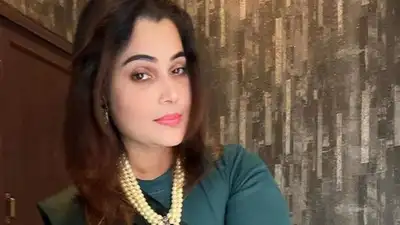
Dr Anitha Punyodaya Misra (Image credit-@___anitha1)
I find them very attractive and charming, and I am fascinated by the richness with which people describe their feelings and symptoms,” said Dr Anitha, who has won multiple beauty pageant competitions, including Mrs Asia International 2022-23, Mrs India Classical 2021-22 and Youth Icon of India 2021-22.
LUCKNOW: When patients in Gonda describe their ailments using vivid expressions such as “jee michlaat hai”, “maatha bhanbhanaat hai” and “shareer jhanjhanat hain”, Dr Anitha Punyodaya Misra understands not only their symptoms but also the emotion behind their words. The doctor recently went viral on social media after speaking fondly about Awadhi phrases and describing the language as “poetry”. Dr Anitha says learning Awadhi was never a conscious mission. “To become a good doctor, you need to connect with patients,” she says.
Two decades after arriving in Gonda from Karnataka’s Mangaluru, the gynaecologist and laparoscopic surgeon has become so fluent in Awadhi that many patients refuse to believe she is a South Indian at all. What began as a simple expression of affection for the local dialect soon turned into a celebration of cultural integration, earning admiration from across the country. It became a necessity born out of her commitment to patient care. Married to surgeon Dr Punyodaya Misra, whose family hails from Gonda, she arrived in the district after her marriage and soon realised that language was the bridge between treatment and trust. “In small towns, many problems are psychological as much as physical. Patients want someone who listens to them in their own language. When you respond in their language, they feel that you are one of them. That realisation transformed her practice. More than half of the patients visiting her clinic from half a dozen nearby districts prefer speaking in Awadhi. “When patients speak in Awadhi, they don’t simply say, ‘I have a stomach ache. Instead, they use vivid expressions such as ‘pet chil chil howat hai’. For throat pain, the expression is ‘natai peerat hai’; for pain in the leg, they say ‘pair tapkat hai’ or ‘pair jhanjhanat hai’. These descriptive words and adjectives make the language incredibly expressive. There is a rhythm and warmth in Awadhi that makes it sound like poetry.