
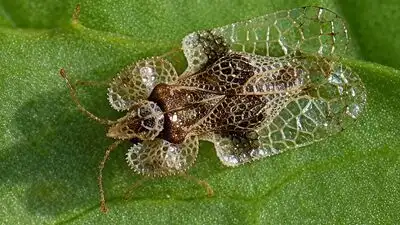
Oak lace bug. Image Credit: Wikipedia
Adults measure only about 3.1 millimetres long and have transparent, lace-like wings. The research states that the species was first documented in northern Italy in 2000. In Europe alone, the researchers estimate that there are at least 35 million hectares of oak forests available to the insect, although the study suggests that around 30 million hectares could potentially be occupied. The study reports that heavy oak lace bug infestations in Europe have been linked to a 58.8% reduction in photosynthesis and a 21.7% reduction in transpiration, the process through which trees move water. During a colder-than-average Hungarian winter, more than 60% of surveyed adults survived. Laboratory work also showed that some individuals could withstand prolonged exposure to temperatures as low as -5°C with relatively low mortality.
The oak lace bug (Corythucha arcuata) is native to the eastern United States and southern Canada, according to the study. Entire oak canopies can be discoloured by late summer, with severe damage sometimes appearing as early as June, according to the study. The research says that low winter temperatures are unlikely to halt the insect’s expansion across its invaded European range.
Despite its small size, the insect has proved remarkably successful outside its native range. The insect’s ability to use a wide range of host trees has also helped its expansion. The study found that nearly all Eurasian deciduous oak species can serve as hosts. The oak lace bug feeds mainly on the undersides of leaves. Both adults and young insects suck nutrients from the foliage, leaving yellowish-grey patches on the upper surface. Heavy infestations can become strikingly visible. In some heavily affected areas, the damage has become extensive enough to be detected through remote sensing. The problem is not simply cosmetic. These effects do not necessarily mean that an individual tree will immediately die. However, the researchers warn that repeated infestations over several years could gradually weaken oak health, particularly when trees are already dealing with drought, other insects or disease. Cold weather might seem like a natural barrier to an insect originating in North America, but the study suggests that European winters have not prevented the oak lace bug from spreading. Researchers found that the insects can survive surprisingly cold conditions. Climate conditions still influence where it can thrive, but modelling discussed in the study suggests that further colonisation remains possible under future climate scenarios.
Damaged leaves may also fall between one and two months earlier than usual.
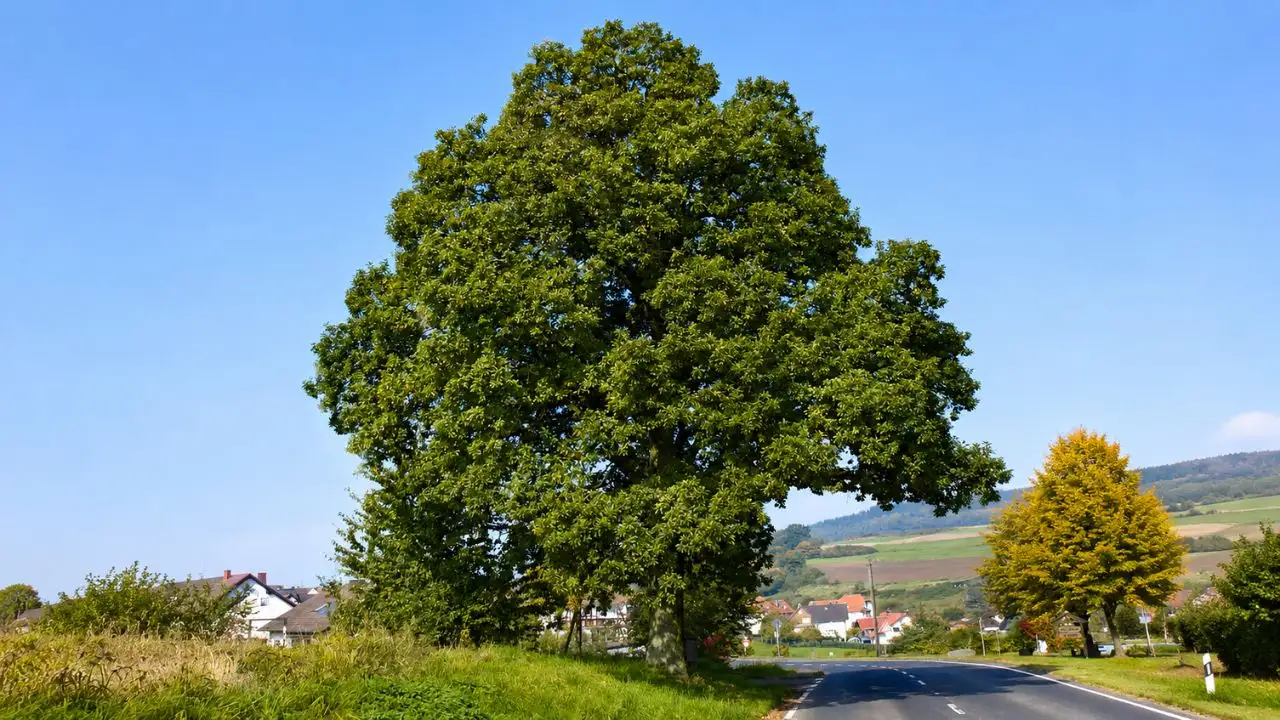
25 years after its first European detection, the oak lace bug has therefore become a serious and still-growing concern. The study identifies one potentially promising option named ‘Erythmelus klopomor,’ a tiny egg parasite found in the oak lace bug’s native range. Researchers believe it could offer a long-term biological control method, but further work is needed to understand its behaviour and ensure that introducing it would not create ecological problems. The research makes clear that its full long-term impact remains uncertain, but the combination of rapid spread, widespread host trees and limited control options means the insect is unlikely to disappear from Europe’s oak forests on its own.
Could repeated feeding affect future generations of oak trees
A tiny insect that was first detected in Europe just 25 years ago has spread across the continent with remarkable speed, raising concerns about the future of vast oak forests. The ‘oak lace bug,’ a North American species barely a few millimetres long, was first recorded in northern Italy in 2000. Since then, it has reached 25 countries and found favourable conditions among Europe’s abundant oak trees. A new research published in the ‘ Journal of Pest Science ’ warns that the insect could potentially occupy up to ‘30 million hectares’ of oak forest in Europe.
Because oaks support a remarkably diverse range of wildlife, that possibility matters. Its feeding can discolour entire tree canopies, reduce photosynthesis and weaken young oaks. Researchers also believe its long-term effects could extend beyond individual trees, potentially affecting acorn production, forest regeneration and the many species that depend on oak ecosystems. Yet Europe still lacks an effective, sustainable way to control it. The review also points to evidence that the insect may affect young trees. The study found that repeated attacks could reduce the growth of oak seedlings. This raises concerns about whether persistent infestations could make it harder for some oak forests to regenerate naturally. Hundreds of insect and mite species are associated with oak trees, meaning a widespread decline in tree health could affect much more than the trees themselves.