PC: BBouchra00/ Wikipedia
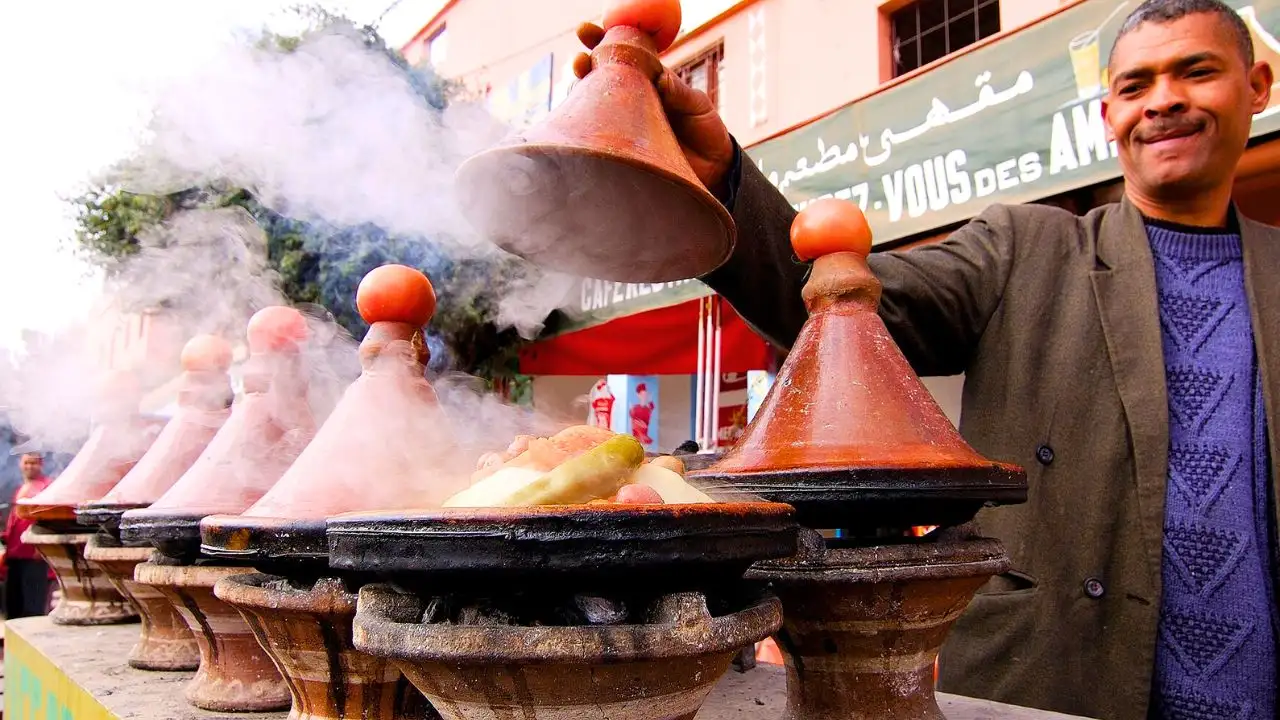
In Marrakech, one traditional meat dish carries a history shaped by the city’s working men and communal spaces. Tanjia is prepared in a rounded terracotta jar, sealed and placed among the embers of a wood fire. For generations, its slow cooking was tied to communal ovens and the furnaces of traditional hammams. The dish was especially associated with working men and unmarried artisans who cooked it away from home and carried it on outings. Its ingredients are deeply rooted in Moroccan cooking, including cumin, garlic, preserved lemon and smen. Hours of slow cooking allow the flavours to develop inside the vessel. But tanjia is more than a meal. Tanjia’s connection with Marrakech’s communal spaces grew from the way working men prepared and shared the dish. Meat was placed in a terracotta jar with seasonings and other ingredients, then sealed with paper and wire. The jar was then taken to a communal wood-fired oven or the furnace of a traditional hammam, where it was left to cook slowly in the embers. At the hammam, the farnatchi, the person in charge of the furnace, looked after the cooking. This arrangement suited the routines of working men, who could leave the dish to cook while they carried on with their work. Tanjia was particularly associated with Marrakech’s artisans and unmarried workers, with communal ovens providing a place to prepare the dish outside the home. Known as a tangia or kallouch, the terracotta jar is associated with Marrakech and made from the same type of clay used for tagines. The study notes that the vessel appears to have evolved from an amphora once used to transport and store liquids. Over time, it became identified with the dish cooked in it. Meat, spices, and other ingredients are sealed in it for a long, gentle cook. The dish could be left to cook through the night, with the meat slowly absorbing the flavours in the ashes. Over time, the terracotta vessel itself became closely tied to tanjia.
Its preparation reflects a time when communal spaces shaped how people worked, ate and socialised in Marrakech, giving the dish a social history that remains part of its identity today.