India’s imperial jewellery heritage was filled with marvels such as diamonds, emeralds, rubies, and ceremonial ornaments that were once owned by Mughal emperors and raja-maharajas of princely states. the majority of the treasure was sold, dismantled, reset, or taken abroad While a few of these relics have ended up in museums. There are, however, some jewels which seem to have no information attached to them. Let’s take a look at some.

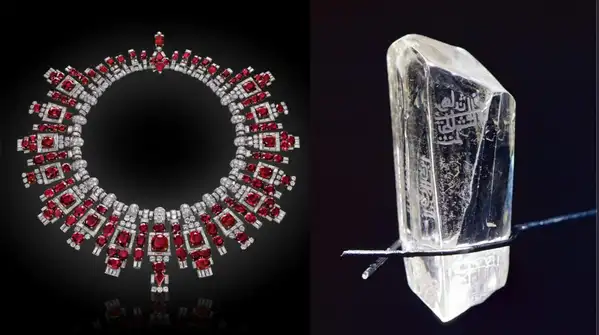
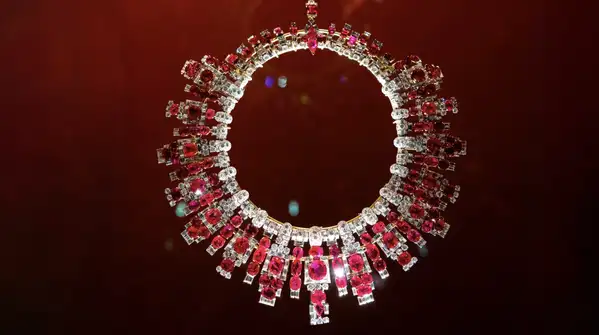
It finally made its way to the treasury of the Mughal Empire and was brought to the French explorer and jeweller Jean-Baptiste Tavernier in 1665. Tavernier reported on his findings about an amazing diamond weighing approximately 280 carats in its polished state. Later on, the diamond became part of the treasure taken by Nadir Shah, who was a ruler of Persia when he invaded Delhi in 1739. After learning that Nadir Shah was murdered in 1747, the trail of the Great Mogul Diamond disappeared. (Image Credits: Pinterest) Famous for its mystery, the Nawanagar necklace is another remarkable object whose current state is unknown. The necklace was made by Cartier for Maharaja Sir Ranjitsinhji of Nawanagar in 1931 and has an incredible collection of diamonds of different colours. This jewel included more than 600 carats of diamonds, among which was an exceptional diamond weighing 136.32 carats, according to historical records.
If there is a diamond which could be classified among truly lost renown diamonds, it would be the Great Mogul Diamond.
But unlike the Patiala necklace, there was no spectacular modern rediscovery of the original piece. (Image Credits: Pinterest) The story of the Akbar Shah Diamond is of special interest, as it is said to contain inscriptions of three Mughal emperors, namely Akbar, Jahangir, and Shah Jahan. This massive diamond was probably discovered in Golconda in southern India at the beginning of the 17th century. Jacques Cartier viewed the necklace as one of the most astonishing pieces of the Nawanagar jewellery collection.
Historically, the diamond has connections with the Mughal treasury, with some sources mentioning it as part of the Peacock Throne, although the question of how it was mounted is a matter of contention among scholars.
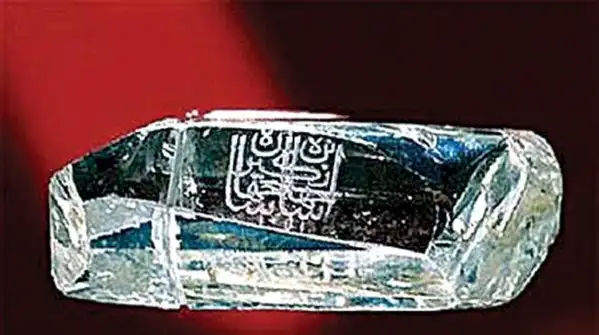
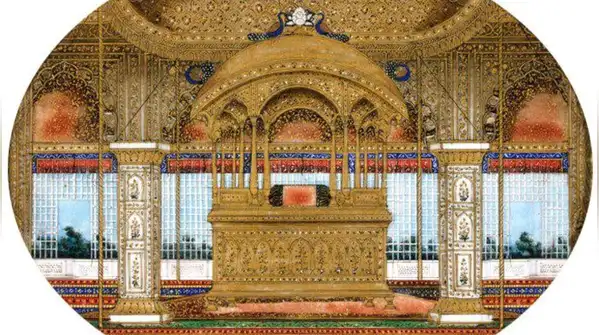
The story of this diamond grows increasingly dramatic as we come to the Persian invasion of Delhi in 1739. George Blogg bought it in London in 1866 and recut it, resulting in the destruction of historical inscriptions. After it was sold for the last time in 1905, there is no information on where it went next. (Image Credits: Pinterest) In terms of strict definitions, the Peacock Throne cannot be classified as a jewel, however, it can be described as one of the finest royal treasures in terms of jewels ever made in India. The circumstances changed in 1739, when Nadir Shah invaded India and took the throne along with the spoils obtained during the attack. The throne underwent a drastic change in 1747 when Nadir Shah was killed, and the throne was dismantled, and the jewels were extracted and spread. (Image Credits: Pinterest) (
By the 19th century, the stone had reappeared in Istanbul and was called the Shepherd’s Stone. The throne was made during the reign of Shah Jahan and was embellished with a variety of precious gems, such as diamonds, rubies, emeralds, and pearls. Scholars note references to this throne in connection with famous jewels such as the Koh-i-Noor and Timur Ruby.