
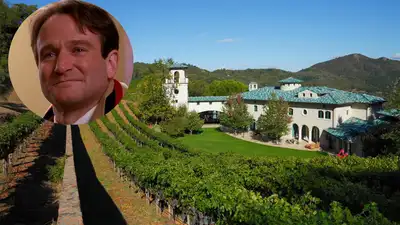
Robin Williams’ Napa Valley estate, known as Villa Sorriso, was an extraordinary private retreat that combined a vast mountain property with a mansion of nearly 20,000 square feet. Williams commissioned the estate in the early 2000s, creating a secluded compound spread across about 640 acres in the Mayacamas Mountains between Napa and Sonoma valleys. Williams first put the estate on the market in 2012 for $35 million, but it did not find a buyer. After several price reductions and years on the market, Villa Sorriso eventually sold in January 2016 for $18.1 million in cash, about half the original asking price.
The property included vineyards, olive trees, a swimming pool, tennis court, horse facilities and extensive trails, while the main house featured luxury spaces including a library, theatre, wine and art storage and multiple bedrooms.
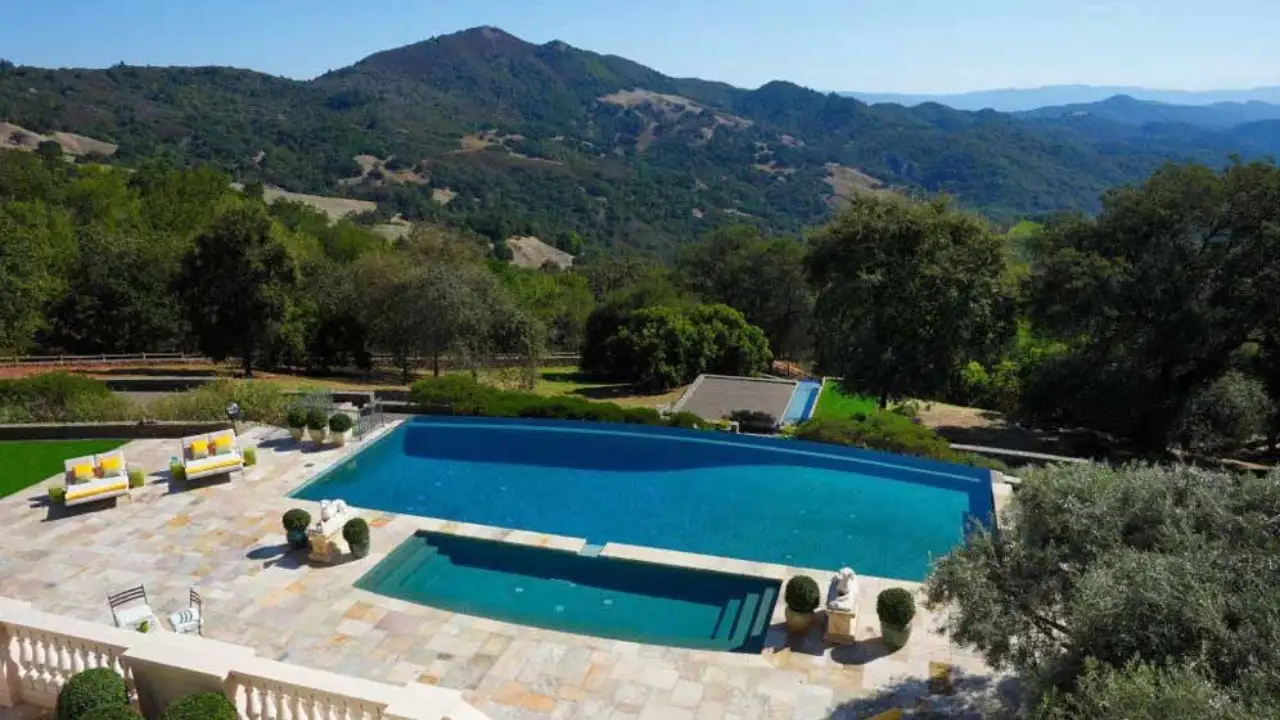
Williams first put Villa Sorriso on the market in 2012 with an asking price of $35 million. When the original listing failed to attract a buyer, the estate was removed from the market before returning in 2014 at a reduced price of $29.9 million. After Williams died in August 2014, the property remained on the market and was subsequently offered at lower prices. By the time it sold, the asking price had fallen to $22.9 million. The Los Angeles Times reported that Villa Sorriso sold for $18.1 million in cash in January 2016, four years after it was first listed. The final price was roughly 48% below the original $35 million asking price. By then, the property had passed through several asking prices, including $29.9 million, $25.9 million and finally $22.9 million.
The sale was reported as an all-cash transaction, with Joyce Rey and Cyd Greer of Coldwell Banker representing the listing.
Contemporary reports said he had spoken publicly about financial pressures associated with his divorces and explained that he needed to sell the property. The long marketing period shows how difficult it was to find a buyer willing to purchase such a large and highly specialised property. The eventual sale represented a substantial reduction from the property’s original asking price. The buyers were French winemakers Alfred and Melanie Tesseron, who were interested in the estate’s vineyard potential.