
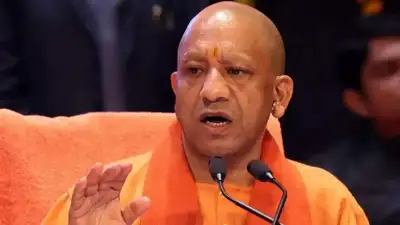
Uttar Pradesh chief minister Yogi Aditynath
A recipient of the President’s Award, Rajan has built a business with an annual turnover of nearly Rs 1.5 crore and provides regular employment to more than 25 artisans.
The ODOP programme played a major role in this transition, according to the information provided by Rajan. The story of Rajan Prajapati, a terracotta artisan from Aurangabad in the Langdi Gulriha area of Gorakhpur, illustrates how this traditional occupation is being transformed into a modern enterprise. His journey has become an example of how Uttar Pradesh’s One District One Product (ODOP) programme is converting traditional skills into sustainable entrepreneurship. Modern equipment, technical guidance, training and market support enabled him to increase production while maintaining the traditional character of the craft. Electric wheels and other machinery reduced the limitations of purely manual production and made it possible to meet larger orders.
The Yogi Adityanath government launched the One District One Product programme in 2018 with the objective of identifying and strengthening the distinctive products and traditional industries associated with different districts. The programme provides 10 days of free training, an honorarium of Rs 200 per day and a relevant advanced toolkit to eligible beneficiaries. Rajan’s story also fits into the larger artisan-oriented policy approach pursued by the Yogi government since 2017. ODOP, launched in 2018, has been complemented by schemes such as Vishwakarma Shram Samman Yojana, which seeks to strengthen traditional occupations by providing skill enhancement training and advanced toolkits to artisans, including potters and handicraft workers.
Gorakhpur’s terracotta journey therefore represents more than the revival of an old art form. The programme seeks to preserve traditional skills while increasing artisan incomes, local employment, product quality and access to national and international markets. The approach marks an important shift in government policy. Instead of treating traditional crafts simply as cultural heritage, ODOP seeks to develop them as viable economic activities. For artisans, this means support at several stages—from skill development and modern tools to finance, branding, exhibitions, packaging and market linkage. The current ODOP framework includes margin-money and financial assistance, training and toolkit support, marketing development assistance and Common Facility Centres. The ODOP Training and Toolkit Scheme, for example, provides structured skill training and modern toolkits to artisans. The objective is to improve productivity, quality and earning opportunities. It is a story of how a centuries-old skill can be connected to modern technology, branding, finance and markets. The success of Rajan Prajapati shows what can happen when government policy meets individual enterprise: a traditional craft can become a modern business, a local product can acquire global recognition, and a skilled artisan can become a job creator.