
Image(s): University of Portsmouth
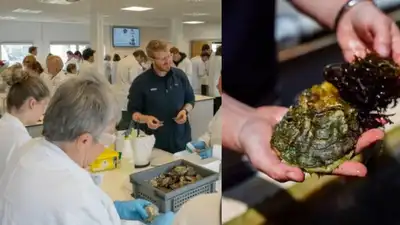
Between 11 and 15 May, about 260 volunteers took part in a series of biosecurity days at the University of Portsmouth’s Institute of Marine Sciences. Their task was simple but important, carefully scrub, wash and inspect 20,000 native oysters before the animals were transported to their new home. Numbers have declined by around 96 per cent over the past century, with overfishing, disease, invasive species and deteriorating water quality contributing to the loss, according to the University of Portsmouth. A single native oyster can filter up to 200 litres of water every day, while oyster reefs create shelter and habitat for hundreds of marine species.
The restoration project is therefore intended to do much more than bring back an iconic shellfish, it aims to rebuild an entire underwater ecosystem. Because people were helping restore a species that had once defined the area’s coastal heritage, professor Jo Preston of the University of Portsmouth said the volunteer effort was inspiring. The cleaning process helps remove invasive species and pathogens that could otherwise be introduced into the restoration site. If successful, the project could demonstrate how large-scale restoration can help rebuild biodiversity while giving local communities a direct role in recovering Britain’s lost marine habitats.
The University said the event represented the biggest volunteer effort the initiative has seen so far. Once prepared, the oysters were deployed in Chichester Harbour by the Blue Marine Foundation at the end of the week. The restoration comes after a dramatic collapse in the Solent’s native oyster population. Yet oysters play an important ecological role. Oyster restoration is also an attempt to reconnect the region with its maritime past. Oyster harvesting in Chichester Harbour dates back to Roman Britain, and the shellfish once played a major role in coastal communities around the Solent. The new reef will be monitored for five years to assess its progress.
But their numbers have fallen dramatically, with populations declining by around 96 per cent over the past century. In May 2026, around 260 volunteers gathered at the University of Portsmouth to clean and prepare 20,000 native oysters before they were moved to a newly built reef in Chichester Harbour.
Before the oysters arrived, teams created the foundation of the reef using “cultch,” a mixture of shell and stone that provides the structure needed for oysters to settle and grow. For generations, native oysters were part of life around the Solent, helping shape its coastal ecology as well as its maritime heritage. Now, one of Britain’s biggest marine restoration efforts is trying to bring them back. The project marks a major step towards rebuilding one of the Solent’s most threatened marine habitats. The newly cleaned animals were then placed onto this prepared habitat in Chichester Harbour, where they can begin establishing a new population. The reef forms part of the Solent Seascape Project, led by the Blue Marine Foundation with Chichester Harbour Conservancy and the University of Portsmouth. The wider initiative is working to reconnect and restore several habitats across the region, including seagrass meadows, saltmarsh, seabird nesting sites and oyster reefs.