
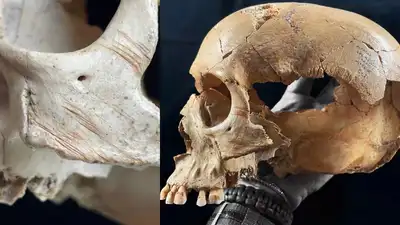
Image: Cut marks on adult human skull from Majolicas Cave/Antonio Rodríguez-Hidalgo
Researchers examined nearly 1,000 human bones from Malalmuerzo, Carigüela and Majolicas caves in Granada, finding evidence that people cut, fractured, chewed and deliberately modified human remains during different periods of the Neolithic. Ancient human remains from three caves in southern Spain are revealing a disturbing but complex chapter in Europe’s prehistoric past. The findings suggest cannibalism was not one continuous tradition, but a practice that appeared repeatedly in different contexts over thousands of years, offering clues about prehistoric violence, death and ritual.
The researchers therefore argue against viewing “Neolithic cannibalism” as one uniform practice. The discoveries at Carigüela offer some of the clearest evidence that the treatment of human remains was not necessarily motivated by hunger alone. Two skulls were deliberately modified into cups, suggesting that parts of the human body could acquire a new symbolic or practical purpose after death. Similar marks on human bones can emerge from very different circumstances, and the archaeological record points towards a complicated relationship between death, the body and community life. These recurring episodes provide a rare glimpse into how prehistoric societies dealt with violence, the dead and relationships between groups.