
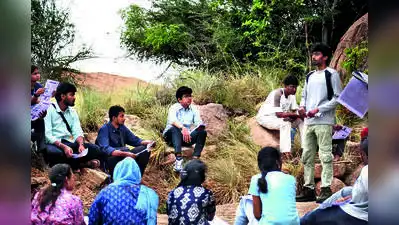
A workshop session on reading ancient inscriptions
In 3rd century CE, cattle were considered the primary form of wealth. Capturing the enemy’s cattle was a strategic declaration of war called ‘aagol’, and recovering or defending them was called ‘meetchi’. The battles fought during these raids are recorded on hero stones found at Irulapatti in Dharmapuri, except they are in Old Tamil, which for decades hardly anyone other than archaeologists and linguists have decoded.
We have more than 250 people from different parts of Tamil Nadu signing up every month and have taught more than 2,000 people so far. Because very few can read the inscriptions, most of history is lost. That’s when I saw the Tamili script workshop and signed up immediately. You Can Also Check: Gold Rate in Chennai | Silver Rate in Chennai | Bank Holidays in Chennai | Public Holidays in Chennai | Chennai AQI | Weather in Chennai | Petrol Price in Chennai | Diesel Price in Chennai | CNG Price in Chennai | LPG Price in Chennai Stay updated with the latest Chennai news.
“We believe this is something everyone should know and be able to access,” says Aakash A, CEO. Noora Zaina, an architecture student, says she has always been interested in history but never knew how to begin. Over time, it’s easy to recognise the pattern and understand what sort of an inscription it is, whether it’s a memorial, commemoration, or recording of a historical event,” says Aakash. Unlike modern Tamil script, he says, Tamili used a form of Brahmi adapted to record the sounds of early Tamil.
But now, a Thanjavur-based organisation, Damarika Archaeological Training Agency, is helping bridge the gap in accessibility for history. “Archaeology is a multidisciplinary subject, and inscriptions are one of its important segments. Over the past year, the organisation has been hosting workshops on decoding the ancient script of Tamili, found at archaeological sites. “We would never have imagined so many people would show interest. “As an architecture student, we visit historical sites and temples, and I would see all these inscriptions. But I could never read what was written. Students have deciphered inscriptions on a variety of subjects from a 5th century cockfight to a 16th-century Kancheepuram idli recipe. “Many words in Tamili, though similar to Tamil, sound different while reading, so we teach participants how to identify these words and correlate the meaning; so they actually understand what they read. Participants are also taken on curated site visits, where they can apply what they have learned. Download the TOI App.
In the workshop, along with context to each inscription and basic history, I learned the evolution of Tamil, from Old Tamil to Tamili-Brahmi and how it evolved to the Tamil we see today with the usage of pulli (dot),” she says.