
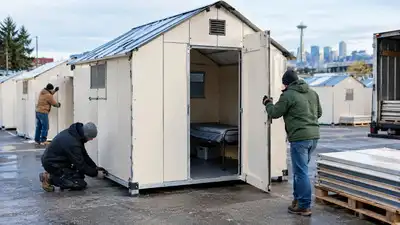
Representative image of a rapidly assembled modular shelter designed to provide temporary housing for people experiencing homelessness. Image credits: ChatGPT.
The company reported that its villages across the United States and Canada had offered more than 6,083 beds and sheltered an estimated 30,000 people. The city had declared a state of emergency over homelessness in 2017 and began using micro-shelters as part of its emergency response, according to the City of Tacoma . In its shutdown announcement in September 2026, the company said customer demands had become more complex and that funding conditions and political priorities were shifting. Pallet says its villages across the US and Canada had provided more than 6,083 beds and sheltered over 30,000 people since 2017.
Pallet is closing its business after nine years of building transitional shelters for people experiencing homelessness, according to GeekWire. Pallet said it employed people with lived experience of homelessness and other barriers to conventional employment, linking shelter production with a so-called fair-chance employment approach. Operators of existing villages will be able to access warranty information and replacement parts, but maintenance will be their responsibility, according to Pallet.
Its closure ends a company that made rapid construction central to its approach to homelessness. The shelters could be assembled in under an hour, but the larger challenge was creating places where people could live indoors, access support services and begin working toward permanent housing. The Kings had construction experience before starting Pallet and initially considered using their modular shelters for people displaced by natural disasters. The design consisted of durable panels that could be transported flat and assembled on site with minimal tools. Their first major opportunity came from the homelessness crisis closer to home. Pallet nevertheless expanded rapidly. The company eventually built its 100th village and supplied shelters to communities across North America. Its workforce model was also part of the company’s mission. The model combined rapid construction with communal services and a path toward more stable housing. However, Pallet later faced sustainability challenges as conditions around homelessness changed. The decision came despite the company’s scale. Its shelters also helped popularise a rapid-deployment housing model that some communities continued to use. The closure also raises questions about what will happen to the infrastructure now that the company is gone.

Pallet’s closure is an ironic ending for a company built around rapid shelter deployment. The company showed how quickly emergency shelter could be manufactured, transported and assembled for thousands of people. But fast assembly alone could not address housing affordability, government support or homelessness itself. The shelters were meant to last for years, but the company that produced them lasted only nine years.