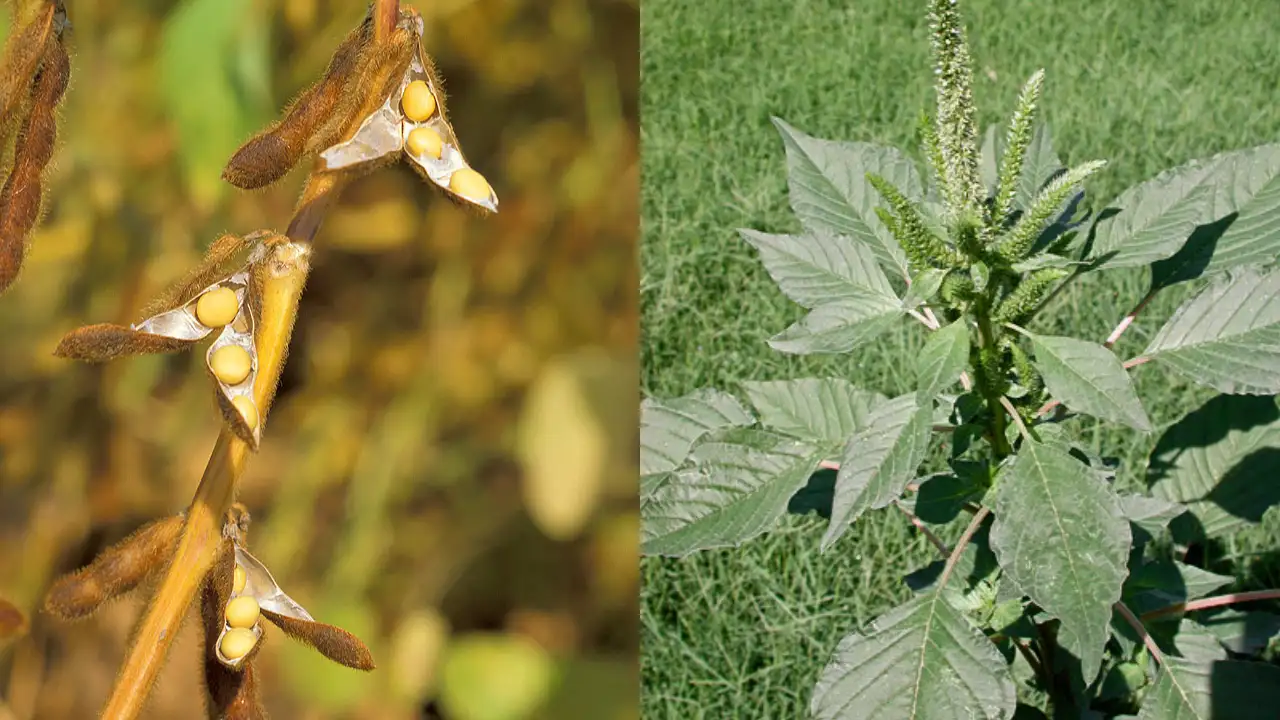
Soybean / Palmer amaranth | Wikimedia Commons
A 2026 study in the Journal of Integrative Agriculture traced populations of the weed in China and found evidence that linked repeated introductions to imported soybean shipments. The research identified 1985 as the date of an initial introduction in Beijing and found that later populations were associated with the movement of imported soybeans. A 2025 study published through the National Library of Medicine reported that Amaranthus palmeri seeds had been repeatedly introduced into China as contaminants in soybean imports since 1985.
Soybean imports from the United States have carried seeds of foreign plants into Chinese ports, with some of those weeds later establishing populations beyond the places where they were first detected. One of the clearest examples is Palmer amaranth ( Amaranthus palmeri ), a weed that is native to the Americas and has become an agricultural problem in parts of China. The researchers concluded that repeated introductions through global grain trade played a major role in the weed’s distribution across China. The researchers found that populations were concentrated near grain-import facilities and documented cases in southern, central, northern and northeastern China. The practical problem is that once a species establishes itself in a new agricultural region, removing it can be much harder than preventing the original introduction. The newer research on A. palmeri suggests that the trade route remains important, as its analysis found genetic and geographic patterns that were consistent with repeated introductions linked to soybean imports, rather than a single introduction followed by uninterrupted expansion.