
An unusual land-swap proposal on a remote Georgia barrier island is putting a new twist on the question of what happens when private property and protected public land overlap. The US National Park Service (NPS) is considering two voluntary land exchanges at Cumberland Island National Seashore, under which it would acquire privately owned parcels in environmentally sensitive parts of the island while transferring federal land to private landowners in return.
A March 2026 presentation to Camden County described the proposed acquisition as covering approximately 142 acres. Reporting by The Current in June said draft agreements contemplated transferring roughly 20 acres of NPS land in one exchange and about 60 acres in another. The agreements also outlined the possibility of single-family residences on some of the transferred property, with proposed limits of up to 15,000 square feet per residence and a maximum height of 35 feet. More than 9,800 acres are designated wilderness, according to the NPS.
Because the land exchanged would become privately owned, even if significant restrictions remain, the proposal has nevertheless attracted scrutiny.
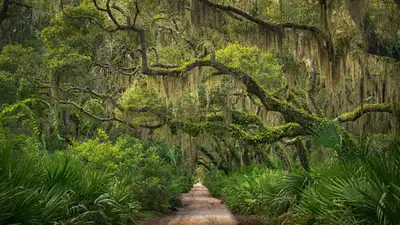
Earlier NPS planning documents said some privately owned parcels intersect the island’s main road, important visitor-use areas and trails, as well as areas containing natural and cultural resources that the park wants to protect. It said the exchange could help protect live-oak maritime forests, beaches, potential historic and archaeological resources, the barrier-island ecosystem, shorebird nesting areas and habitat used by threatened sea turtles. The easements would permanently limit development, prohibit subdivision and provide protections for natural and cultural resources, according to the NPS.
Bringing these properties under NPS ownership could create more continuous corridors of publicly managed land and make long-term management easier. This is where the proposal becomes particularly unusual. Instead of simply selling federal property, the NPS plans to transfer land subject to conservation easements. These legal restrictions would stay attached to the property even if ownership changes in the future. The restrictions are intended to remain in place across future changes in ownership. That means federal ownership could change without removing the land entirely from the island’s conservation framework. The island, off the coast of southeastern Georgia, is the state’s largest barrier island and contains a mixture of maritime forest, salt marshes and beaches. Its isolation has helped preserve an unusual coastal ecosystem. The island provides habitat for a range of wildlife, including shorebirds and sea turtles, while its forests and marshes form part of a larger barrier-island system. That ecological character is one reason the ownership pattern matters.
The agency has described the transactions as voluntary and says it has worked with participating landowners to ensure that permanent conservation easements would accompany any federal land leaving government ownership. Superintendent Melissa Trenchik said the goal is to protect sensitive habitats, preserve the island’s wilderness character and improve long-term stewardship.