
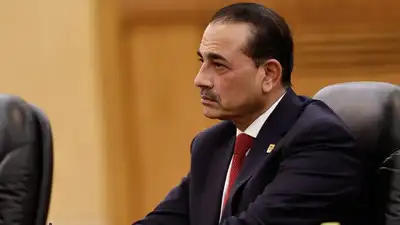
Asim Munir
Saudi Arabia, Pakistan and Turkey signed the Strategic Mutual Defence Agreement in September 2025 and expanded it into the three-way Mecca Pact in August 2026, with a joint secretariat based in Riyadh and Pakistan holding the first three-year chairmanship, Al Jazeera reported.
Pakistan’s defense minister, Khawaja Asif, said this week that an unprovoked attack on Saudi Arabia or a spillover of the Yemen war would make the Mecca agreement operational, adding, “there should be no doubt in this,” though he gave no specifics on what that would look like in practice. As Houthi forces seized Mokha and Perim Island last week, Pakistan’s army chief Field Marshal Asim Munir spent the moment on the phone with Iran’s foreign minister Abbas Araghchi. Munir seems in no hurry to mobilise Pakistan military against Saudi Arabia’s attackers. Why it matters: Saudi Arabia’s Prince Mohammed bin Salman (MBS) planned the Mecca Joint Defence Agreement with Pakistan and Turkey specifically as insurance against a moment like this one. Yet the pact’s first real test is exposing how little Riyadh can actually count on Islamabad, whose army chief has far stronger incentives to stay out of a shooting war with Tehran than to jump into one on Saudi Arabia’s behalf. The pact has never been invoked. Turkey’s foreign minister, Hakan Fidan, has compared the pact’s mechanics to NATO’s, under which an attacked member requests specific help rather than triggering automatic intervention. There is not much clarity on when a Mecca pact member would seek help from others: Under what circumstance, an attack on a member would be regarded as an attack on all members? It is not clear whether Saudi Arabia has asked for Pakistan’s help in its fight against Houthis. As per an Axios report, MBS did reach out to US President Donald Trump to seek US help against Houthis. But Trump declined to come to Saudi Crown Prince’s rescue.
In 2015, Pakistan’s parliament unanimously rejected King Salman’s request to send troops into the Saudi-led coalition against the Houthis. As per reports, Pakistan already has roughly 16 JF-17 fighters, air-defense units and thousands of troops stationed in Saudi Arabia under earlier bilateral arrangements, which lets Munir point to a visible Pakistani footprint in the kingdom without ever having to fire a shot at the Houthis. Importantly, this isn’t the first time Pakistan would be failing Saudi Arabia militarily. Pakistan relies heavily on Saudi Arabia and the Gulf for foreign exchange, investment, energy support and financial assistance. That dependence cuts in Riyadh’s favour on paper but works against a real Pakistani commitment in practice. But Munir has good reasons to hedge that have nothing to do with sentiment toward Riyadh. Pakistan shares a long, porous border with Iran and has its own security concerns there. Joining a campaign against the Houthis could turn Pakistan’s support for Riyadh into a confrontation with Iran and its partners.
The bottom line: MBS signed the Mecca Pact to buy himself military insurance against exactly the kind of Iranian-aligned assault now unfolding on his coastline. Pakistan also has a sizeable Shia population and may face domestic opposition if it intervenes directly in Saudi Arabia-Houthi fight. There’s also a Washington dimension complicating things. Munir has spent the past year cultivating Donald Trump. With Trump having twice rejected Saudi requests for US strikes on the Houthis, Munir is unlikely to take a position that could put him at odds with the US president, especially on an issue where Trump has already made his position clear. Even a willing Pakistan could not easily repair the military and political weaknesses exposed in Yemen. The Houthis’ advance was enabled partly by divisions among their opponents. Saudi-backed forces failed to cooperate effectively during the offensive. The withdrawal of the UAE also deprived the coalition of a capable supporter and deepened problems with southern factions. Additional Pakistani aircraft would not automatically resolve rival chains of command, competing territorial ambitions or distrust between local forces. Would Pakistan be defending Saudi airspace, reopening shipping lanes, recovering territory or helping impose a settlement? Each objective entails different resources and risks. But Munir’s incentives point toward mediating the Houthi crisis from Tehran’s side of the table, not fighting it from Riyadh’s, leaving Saudi Arabia’s newest ally looking a lot more like a hedge than a rescue plan. (With inputs from agencies) Catch the latest World News and Live updates. Download the TOI app.