
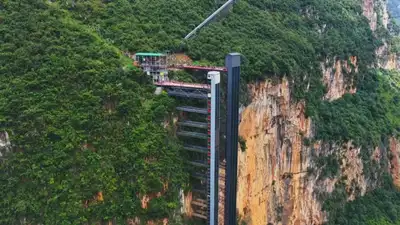
Their route to the classroom involved steep mountain paths, narrow trails and an exhausting climb along the side of an 800-metre cliff. For years, going to school was a daily test of endurance for children living in Nizhuhe village in southwest China. The journey could take nearly three hours, with children leaving home before sunrise and returning tired after a full day at school.
Today, the same journey takes about 30 minutes, thanks to a combination of a shuttle bus, two cliffside elevators and a cable car system. The village lies at the bottom of the Nizhu River Grand Canyon, while Guanzhai Village Primary School is located more than 500 metres above it. Zhao Suzhen, the mother of 12-year-old student Lei Xin, recalled worrying about her son’s safety as he travelled along the cliffside path.
The unusual transport network has turned what was once described as the most dangerous school commute into a safer and more predictable trip for students living in the remote mountain village. Nizhuhe village is located in Puli township in Xuanwei city, Yunnan province, near the border with Guizhou province. The school serves children from several nearby mountain communities, including Nizhuhe. For parents, the concern was not simply that their children had to walk for hours. The bigger fear was that something could happen on the way. Children had to complete the route regularly, regardless of the weather or the season. The new route allowed students to take a shuttle bus from the village to the foot of the cliff, ride the elevator upwards and then continue by cable car towards the school.
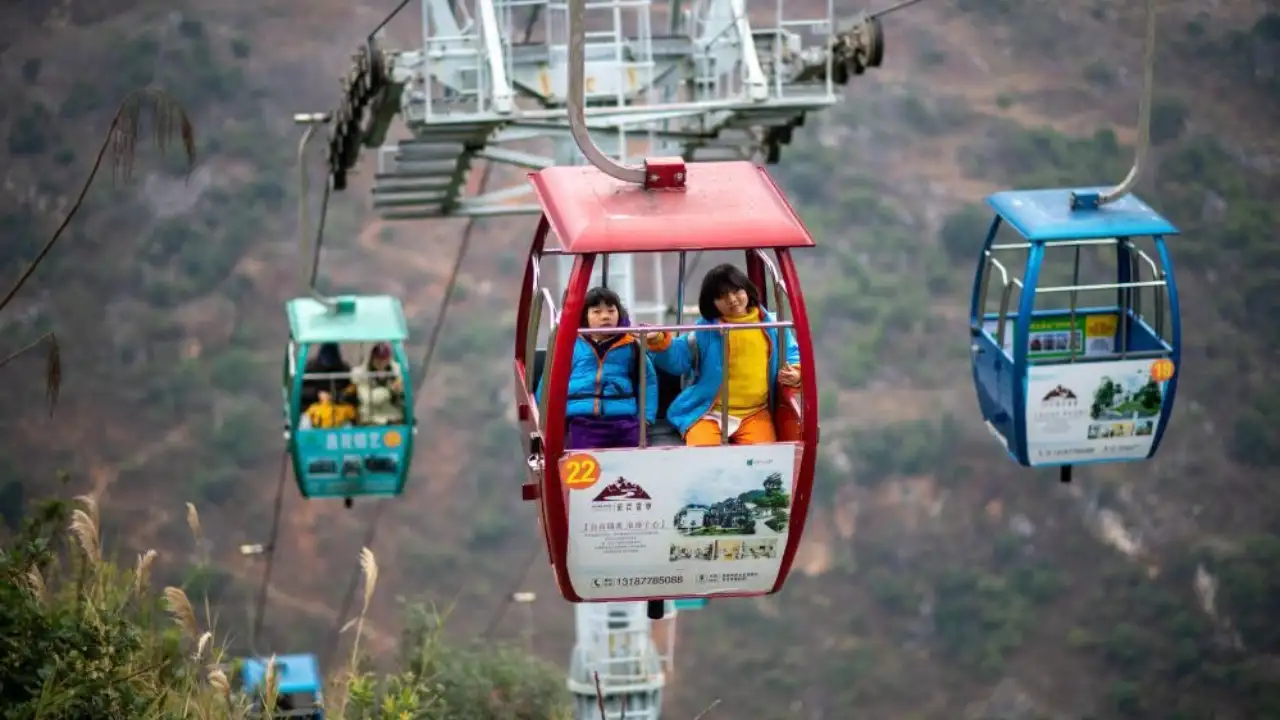
The second elevator operates alongside the earlier 268-metre Qingyun elevator. Together, the two lifts can carry up to 1,200 passengers every hour, increasing the capacity of the transport system and reducing the pressure caused by the growing number of visitors. By the end of August, the facilities had carried nearly 1,000 student trips between the village and the school, according to Xinhua.
The new system has been described as an “aerial school bus”. The new route allowed students to take a shuttle bus from the village to the foot of the cliff, ride the elevator upwards and then continue by cable car towards the school. The transport facilities were made free for residents of Nizhuhe and Guanzhai villages, including students. The elevators have also made it easier for local children to travel to school without competing with tourists for space. During peak hours, dedicated student passages are used, while police officers and staff help manage the movement of children and passengers.
The journey, which previously involved a long and risky trek, was reduced to around half an hour.