
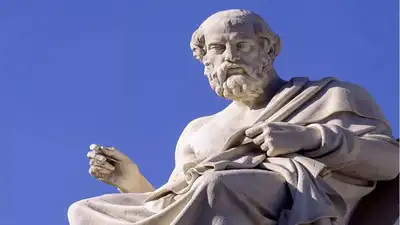
Quote of the day by Plato
Two people can face down a difficult external challenge and describe their success in very different terms. One credits the win entirely to overcoming an opponent, a competitor, a rival, treating victory as something that happens strictly between two separate, opposing parties. Plato, in the Laws, one of his final dialogues, ranked these two kinds of victory explicitly and without much hedging, placing self-mastery firmly above any triumph over an external opponent, and treating defeat by one’s own worse impulses as a genuinely deeper, more shameful failure than any loss to an outside rival could ever really be. “The first and best victory is to conquer self . To be conquered by self is, of all things, the most shameful and vile. What gives this line particular weight is where it appears. Unlike the more famous Republic, which sketches an idealised philosophical city ruled by philosopher-kings, the Laws is widely considered Plato’s most concrete, practically minded work, written in his old age and focused on the detailed legal and social structures a real, workable city would actually need. Self-mastery, in that context, wasn’t presented as an abstract virtue for philosophers alone to pursue. That emphasis reflects a theme running through much of Plato’s broader philosophy, inherited in part from his teacher Socrates, who was famous for arguing that genuine wisdom began with confronting one’s own ignorance and impulses honestly rather than assuming external achievements were the real measure of a well-lived life. Placing self-conquest above conquest of others wasn’t simply a moral flourish for Plato. It reflected a considered view about where the actual difficulty, and the actual value, of virtue was located, inside the person doing the striving rather than in whatever external contest they happened to be measured against.
The other recognises that the harder, more decisive battle actually happened somewhere else entirely, inside their own impulses, fears, and appetites, long before the external contest was ever properly settled.
That question won’t make the external challenge disappear. It usually reveals which battle actually needs to be won first, and makes it much harder to keep quietly losing the internal one while insisting the real fight is happening somewhere else entirely. It was treated as a foundational requirement for any citizen expected to participate responsibly in a functioning community, since a person unable to govern their own impulses could hardly be trusted to help govern anyone else’s affairs, or even their own household, well. The useful move here is noticing how much of a difficult situation is actually an external problem, and how much is really a struggle with one’s own impatience, fear, or appetite, dressed up convincingly as an external problem so it’s easier to blame something outside yourself. It’s often much easier to focus entirely on an outside obstacle, a rival, a deadline, a difficult circumstance, than to admit that the harder, less flattering part of the struggle is actually internal, and that no amount of managing the external situation will resolve it on its own. A fair test, in the middle of any difficult contest or decision, is to ask honestly which part of the struggle is actually external, and which part is really about managing your own impulses well enough to handle the external part effectively at all. “Education certainly gives victory, although victory sometimes produces forgetfulness of education. “Self-love is the source of that ignorant conceit of knowledge which is always doing and never succeeding. “There is simple ignorance, which is the source of lighter offences, and double ignorance, which is accompanied by a conceit of wisdom. Catch the latest World News and Live updates. Download the TOI app.