
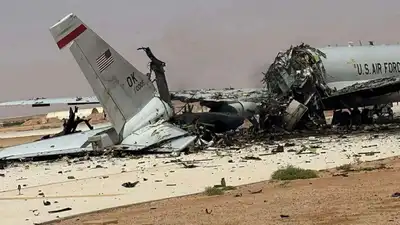
Hidden cost of US-Iran war revealed
A September Marquette poll found only 13% of Americans believed US war objectives had been achieved, while 79% said the war had not been worth the cost. The disclosure that Iran is giving America a bloody nose challenges President Trump and Defense Secretary Pete Hegseth’s early-war assurances that the US has beaten Iran into submission and there is no shortage of munitions as has been reported in the media.
“This is major damage to our bases that hasn’t been communicated to the American public,” one service member told the network. Another, referring to Pentagon language describing missiles that got through defenses as “squirters,” said: “We’re standing there with our eyes closed getting punched in the face. “Our stockpiles of defensive and offensive weapons allow us to sustain this campaign as long as we need to,” Hegseth said in March, adding that Iran was making a “really bad miscalculation” if it believed the US could not sustain the fight. By July, however, Hegseth was asking Congress for $67 billion in additional funding and warning that without supplemental money the Pentagon “could face critical shortfalls” affecting its ability to pay troops, replenish equipment and munitions and sustain global operations. The IG now provides the missing middle chapter: the war did not merely consume ammunition; it produced what the report calls “strategic inventory shortfalls” and exposed bottlenecks in production. The defense industrial base, the report says, requires “significant lead time” to expand production.
Solid-rocket motors, high-grade explosives, propellants and skilled manufacturing labor are identified as constraints. Meanwhile, US attention is being pulled in other directions, even as the war is entering its seventh month, with the White House now talking about an end after the November midterms. Elsewhere, Congress is challenging the continuation of hostilities and public support is weakening.