(Image Credits: Instagram)
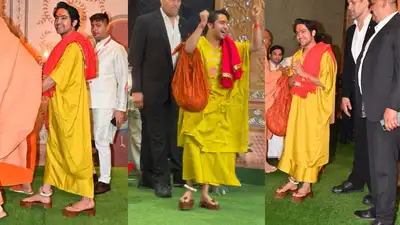
Pandit Dhirendra Krishna Shastri, also known as ‘Bageshwar Baba’ showcased an unusual choice of footwear at the Ganesh Chaturthi celebrations in Mumbai. Bageshwar Baba donned the wooden khadau (footwear), part of India’s traditional fashion, and combined them with gold anklets to look wonderful while conserving the aesthetic ethos. This is a unique reminder that the fashion world is not dependent on labels or big designers, sometimes people make more interesting choices than any runway show can offer. He graced the event in a bright orange traditional outfit and a dark maroon ethnic shawl with golden detailing, but his ornaments made the loudest noise online. He wore the traditional wooden Khadau sandals on his feet with distinct red-coloured alta and heavy gold kadha anklets. (Image Credits: Instagram) Although certain internet users admired his dedication to conventional spiritual values, others were intrigued by the meaning behind his traditional shoes and jewellery at a popular Ganpati event. Let’s learn more about these traditional wooden sandals. What is wooden khadau ?

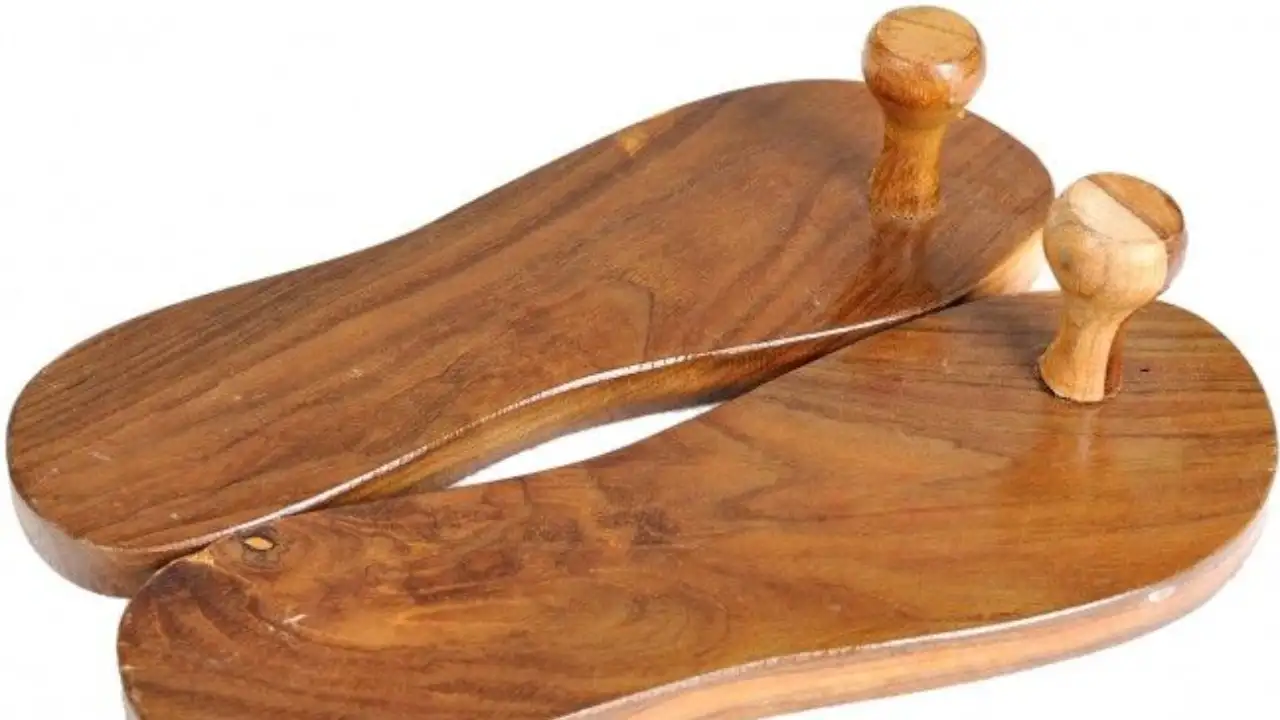
As per the epic story, Rama was banished to the forest for 14 years. The Sanskrit word ‘pādukā’ derives from pāda, which means foot. Centuries ago, long before sneakers, loafers and high-end sandals became fashion statements, India had its own distinctive form of footwear: the khadau. Also known as the paduka or kharawan, this ancient footwear consists of a flat wooden platform with a toe peg positioned between the big toe and the second toe. Conventional khadau is simply a wooden base with a small stick or peg between the big toe and the second toe. Unlike modern sandals, there are typically no straps fastening the footwear to the person’s feet. The wearer keeps the wooden portion fixed to the feet while walking. The terms khadau, kharawan, and other associated regional titles are used to denote this kind of footwear. The ‘Ramayan’ connection Possibly the most notable cultural significance of the paduka comes from the epic – Ramayana. During this time his brother Bharata came to see him to persuade him to return to Ayodhya, but Rama would not break his vow of exile. Bharata then asked his brother to give him his sandals and returned with them, as they symbolised the boundless authority of Rama. Bharata placed Rama’s sandals on the throne and ruled on his behalf instead of taking the throne for himself. This legendary story gave the simple sandals a much deeper meaning, turning them into a powerful symbol of devotion and humility. (Image Credits: Pinterest) Why is khadau associated with saints and ascetics? Khadau has been clearly linked with sadhus, monks, ascetics, and other religious authorities. Their minimal design links to the general symbolism of asceticism, which features few possessions, simplicity, and withdrawal from the comforts of material life. Historians tell us that padukas were worn by ascetics and religious leaders, however, ordinary followers also wore them. The absence of leather in many traditional wooden forms helped make them religiously appropriate since they do not harm animals in the process. Interestingly, such a design requires a specific type of walking that involves conscious balance since the sandal is held on the foot practically only by the toe peg. Looking for trusted parenting advice? Follow TOI Parenting Circle on Instagram for expert guidance, relatable stories, and practical tips delivered every day. Get the latest Lifestyle News and more. Download the TOI app.