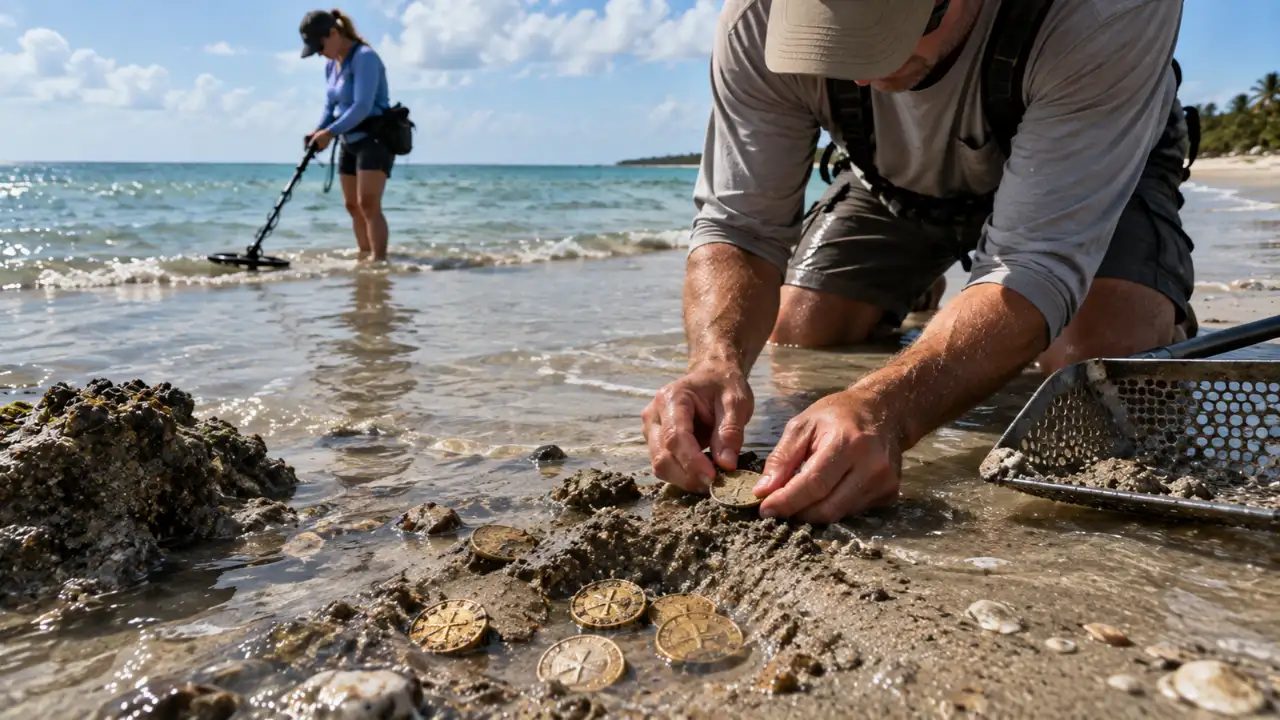
AI REPRESENTATION: Treasure hunters search shallow waters off Florida’s Treasure Coast for remnants of the 1715 Spanish Fleet | CHATGPT
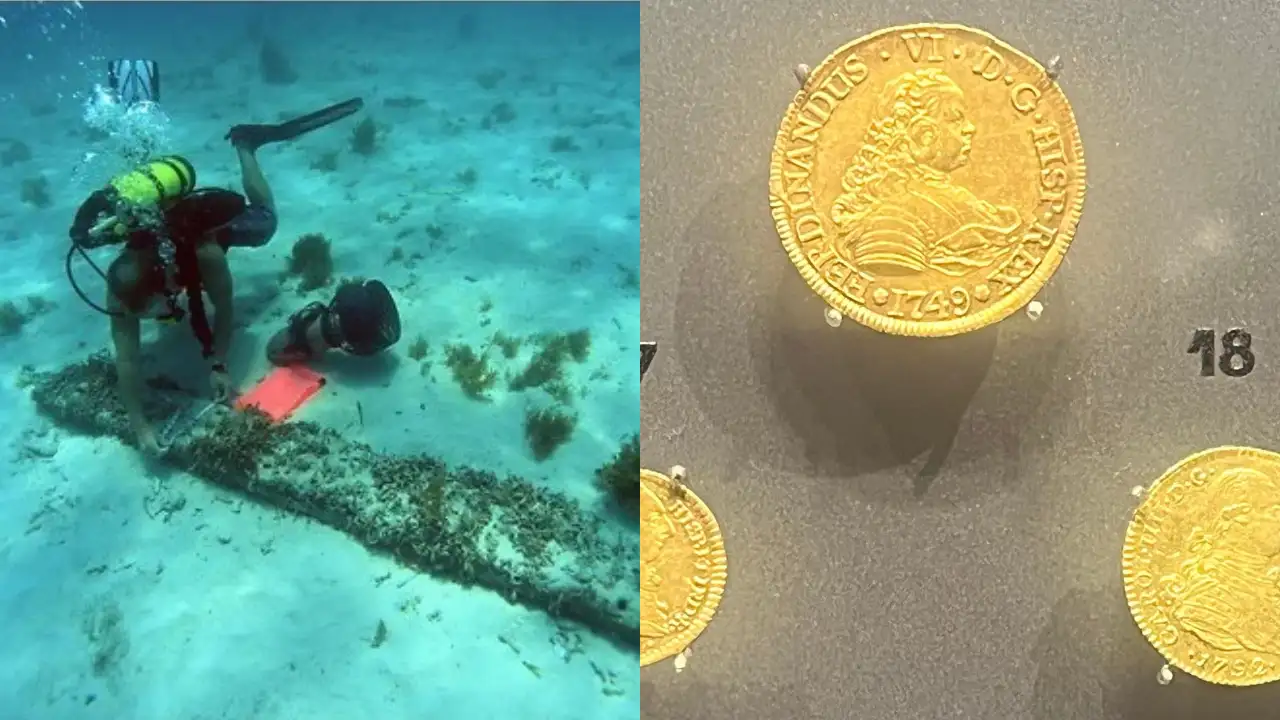
Another piece of a 300-year-old Spanish treasure story in 2015 was recovered off the Florida coast, when the Schmitt family recovered 51 gold coins and about 40 feet of ornate gold chain from the wreck of the flagship of Spain’s 1715 treasure fleet, Capitana. The haul was valued at more than $1 million and included a rare 1715 Royal Mexico Eight Escudos coin known as the “Tricentennial Royal. TIME reported that the Schmitt family, who were professional treasure hunters working as subcontractors for 1715 Fleet-Queens Jewels LLC, had discovered the treasure off Florida’s coast. On July 30 and 31, 1715, the ships were caught in a hurricane while sailing past the Florida coast. National Geographic reported that 11 of the fleet’s 12 ships were lost during the storm, and scattered their cargo along the coastline. AI REPRESENTATION: Treasure hunters search shallow waters off Florida’s Treasure Coast for remnants of the 1715 Spanish Fleet | CHATGPT The Schmitt family had already been involved in searching the 1715 wrecks for years, and TIME reported that the family had first found gold in 2013. The coin that stood out The centerpiece of the recovery was a Royal Mexico Eight Escudos dated 1715, a coin that was struck during the same year the fleet was lost. TIME reported that the rare coin alone was valued at more than $500,000. The Numismatic Guaranty Company documented the 2015 recovery and gives the date as June 18, 2015. It records the find as 51 gold coins and 40 feet of ornate gold chain, with the Tricentennial Royal identified as the centerpiece. A 1715 Spanish Fleet shipwreck site off Florida, alongside gold coins recovered from the historic wreck | Wikimedia Commons A discovery timed to history The recovery was made public in July 2015, rather than immediately after the find. The divers were working in about 15 feet of water roughly 1,000 feet from a beach near Fort Pierce, Florida. Three centuries earlier, the hurricane had scattered the fleet and its cargo along the Florida coast, and in 2015, the anniversary brought attention back to the same wreck site as divers recovered objects that had remained buried beneath the seabed for generations. The NGC record shows that the Capitana produced another major recovery later that summer, when 350 gold coins were recovered on July 30 and 31, exactly 300 years after the fleet’s destruction. For the Schmitt family, however, the earlier June recovery remained particularly notable since the combination of 51 gold coins, a 40-foot chain, and a rare 1715 Royal turned a section of Florida’s seabed into a time capsule from one of Spain’s most famous treasure fleets.
Because of both the number of gold coins and the unusual piece of jewelry found with them, their later discovery from the Capitana became one of the more notable recoveries from the wreck. National Geographic reported that the discovery had been made in June and that the Schmitt family waited to announce it so the news would coincide with the 300th anniversary of the fleet’s sinking.
It became known as the “Tricentennial Royal” because its recovery came roughly 300 years after it was made and lost at sea. A fleet caught in a hurricane The Capitana was part of a Spanish fleet that was carrying gold, silver, and other valuable cargo from the Americas toward Spain. The wrecks subsequently became targets for generations of salvors and treasure hunters. The Capitana was among the vessels searched repeatedly, and modern recovery operations eventually brought individual coins and other artifacts back to the surface. The rest of the haul included dozens of other gold coins and a long, ornate gold chain. Most of the recovered coins were minted in Lima, Peru, and included eight- and two-escudo denominations, which also illustrates why shipwreck coins can be valuable beyond their gold content. Catch the latest World News and Live updates. Download the TOI app.