
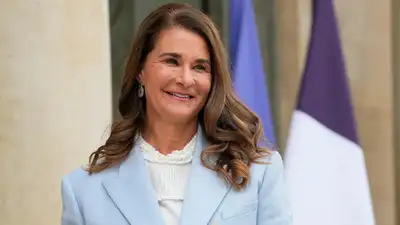
Melinda French Gates has spent decades studying how people and institutions absorb disruption — new leadership, shifting funding priorities, entire strategies redrawn mid-course, partnerships that dissolve and reform in different shapes. Her career, first inside the world’s largest philanthropic foundation and later through her own venture, has been built almost entirely around environments where the plan on paper rarely survives contact with reality. It would be easy to talk about that only in the language of planning and contingency — risk management, strategic pivots, the vocabulary people reach for when they want to sound in control of uncertainty. Instead, in her writing and public reflections, Gates keeps returning to something far more personal and far less tidy: not how to control what comes into your life, but how to meet it, undefended, once it actually arrives.
It accepts, almost matter-of-factly, that “all kinds of people and things” will keep showing up — some welcome, some not, most outside our control. What Gates offers instead is a shift in where the power actually sits: not in preventing change, but in how we choose to hold it. The same idea surfaces in how she talks about her philanthropic work. Programs she has funded across health and education rarely unfold as designed — governments change, communities respond in unexpected ways, funding priorities shift with global events. She has often noted that the initiatives which endure are rarely the most rigidly planned ones, but the ones run by people and organisations willing to adapt their approach mid-stream without losing sight of the underlying goal.