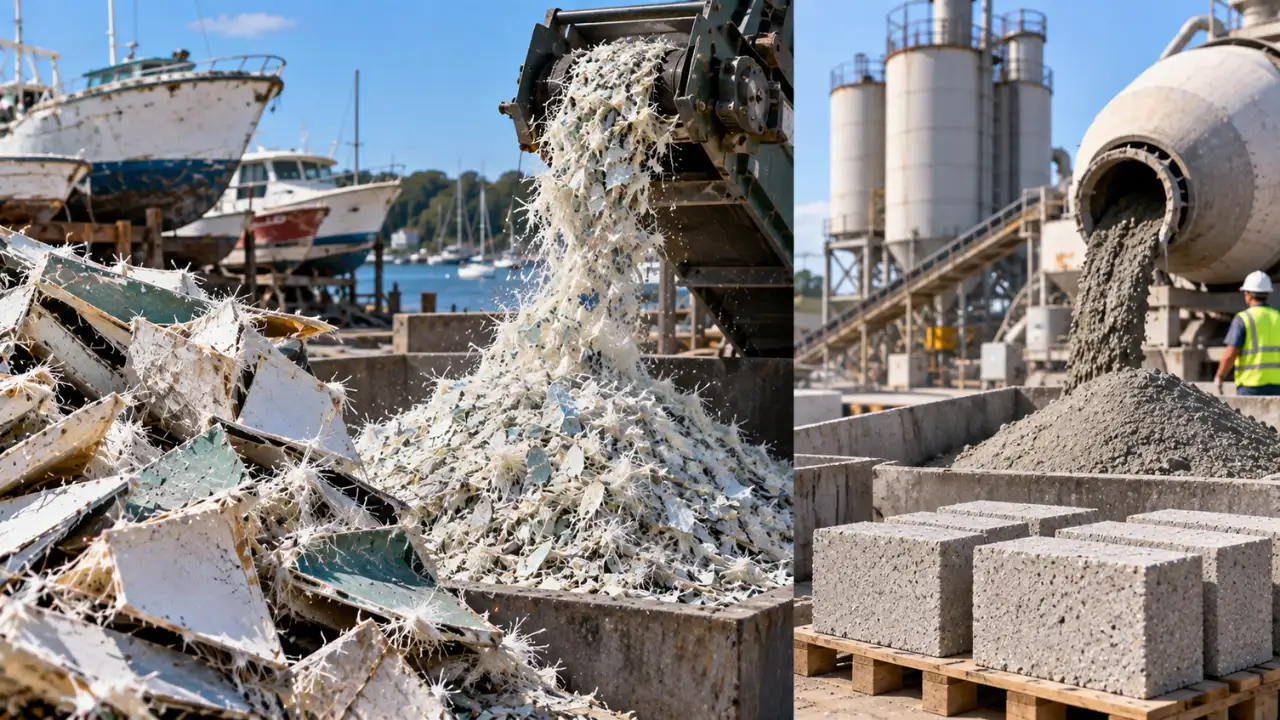
Image AI generated
The pilot recycled 80 short tons of fibreglass from derelict and abandoned boats, according to a Rhode Island Marine Trade Association Foundation report. NOAA later reported that RIMTA recycled nearly 20 metric tonnes of fibreglass in New England during the project period. Backed by a $105,000 NOAA grant, the initiative explored how the model could expand beyond Rhode Island as about 200,000 recreational boats reach the end of their usable life in the US each year. The programme recycled 80 short tons of fibreglass material from derelict or abandoned boats and incorporated it into cement. That is about 72.6 metric tonnes, although the original report gives the figure in short tons. RIMTA successfully recycled nearly 20 metric tons of fibreglass in New England during the project period. Image AI generated The programme received a $105,000 NOAA grant to explore whether Rhode Island’s approach could support a national vessel-recycling model. The scale of the problem is significant, with NOAA estimating that about 200,000 recreational boats reach the end of their usable life in the US each year.
The Rhode Island initiative, led by RIMTA executive director Brian Dursi as a “proof of concept” programme. The project was part of a broader effort to establish a sustainable model for end-of-life vessel recycling, according to the National Oceanic and Atmospheric Administration. A Rhode Island pilot is demonstrating how fibreglass boat recycling could provide an alternative to sending old and derelict vessels to landfill. The programme shredded fibreglass hulls and sent the material to a cement manufacturer for use in cement production. The programme helped expand interest in vessel recycling beyond Rhode Island, with states including Ohio, Maryland, Virginia, California, Washington, North Carolina, South Carolina, Connecticut, Massachusetts and Maine engaging in the process. The key part of the Rhode Island model was not conventional recycling into another fibreglass product. Instead, the shredded material was sent to a cement manufacturer, where it could be used during cement production. When fibreglass from end-of-life boats is co-processed in a cement kiln, it can provide both thermal energy and a replacement for some raw materials used to make cement. This approach gave the unwanted boat material a use while addressing a disposal problem that has few established alternatives. The project also demonstrated how a network involving boat owners, marinas, dismantlers, transporters, shredders and cement producers could be assembled. However, the process remained expensive, with costs associated with dismantling boats, shredding fibreglass, transporting the material and getting cement kilns to accept it. Several states, including Maryland, Virginia, California, Washington and Massachusetts, became involved in exploring or establishing vessel-recycling programmes. However, Rhode Island’s programme was paused after its grant funding ran out, as RIMTA searched for new partnerships and funding to make fibreglass recycling more financially sustainable. Catch the latest World News and Live updates. Download the TOI app.