
Image: AI
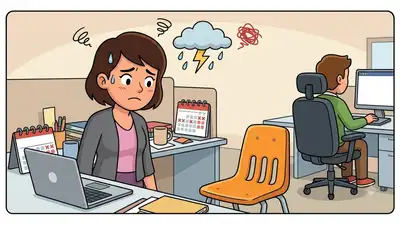
Because another colleague took their usual chair does not automatically mean they are territorial, controlling or unusually rigid, someone becoming annoyed. You walk into the office, glance across the room and stop. Someone is sitting in your chair. It isn’t technically your chair. There may be no nameplate, no reserved sign and no company rule saying you own it. Yet for some reason, seeing someone else there can feel disproportionately irritating. The strange part is that the chair may have become part of a much bigger routine without you noticing. Psychology research on habits shows that repeated behaviour becomes linked to familiar surroundings and cues. When those surroundings suddenly change, an automatic routine can be disrupted. If you have been sitting in the same office chair every morning, several things become predictable at once. You walk into the same room. You place your bag in roughly the same spot. You open your laptop, adjust the chair and begin working. Eventually, you may not consciously decide where to sit at all. The location itself can become part of the cue. Research on habit formation describes habits as behaviours that become associated with recurring contextual cues. Those cues can include location, objects, routines and other features of the surrounding environment. With repetition, the context can help trigger the familiar behaviour automatically. So when someone takes your usual chair, the irritation may partly come from having your familiar sequence interrupted. This is where psychology gets more interesting. A familiar seat simply reduces one tiny decision in the day.
You may find yourself looking around for another seat, wondering whether to wait, or quietly thinking, Why did they have to sit there today?
You know where you will sit. You know the height of the chair. You know where the light falls. Your monitor is positioned there. Perhaps the charging socket is nearby. Maybe the chair faces the colleague you usually speak to. Over time, all those small details become part of the environment in which you repeatedly work. Researchers have found that contextual cues can help make behaviour more automatic, and changing the context can disrupt established habits. Psychologically, probably not in the literal sense. But if you have used the same chair every day for months, it may have become a familiar environmental cue within your workplace routine. That helps explain why something as trivial as another person sitting there can feel surprisingly disruptive. The reaction is not necessarily about the chair itself. It may be about the tiny chain of familiar actions surrounding it. Looking for trusted parenting advice? Follow TOI Parenting Circle on Instagram for expert guidance, relatable stories, and practical tips delivered every day. Get the latest Lifestyle News and more. Download the TOI app.
And tomorrow, when you walk into the office and automatically look toward that chair first, you may notice something you normally overlook: your brain has already learned where your workday begins.