
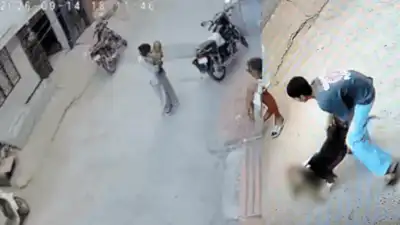
6-month-old mauled by pit bull in Sonipat
CCTV footage of the September 14 incident, reported by media, shows people rushing towards the child before a man intervened and managed to free him. Because the wound looks small, a dog bite should not be dismissed simply. The Sonipat attack has therefore opened up a more uncomfortable question than simply “How should parents protect children from dogs?
And if an owner knows that a dog is difficult to control, simply assuming that “nothing has happened before” is not the same as having a safety plan. A six-month-old baby was in his aunt’s arms when a pet pit bull suddenly lunged at them in Sonipat’s Sikka Colony. Within moments, the dog had knocked the woman down, grabbed the infant and dragged him along the roadside. The baby suffered deep injuries to his face, mouth and hand and was referred for treatment at Rohtak PGI. Owners should: Keep dogs securely leashed in shared public spaces. Check that gates, doors and fencing cannot be accidentally left open. Give dogs a separate space where they can retreat undisturbed. Never encourage rough or aggressive play. Watch for signs that the dog is frightened, stressed or uncomfortable. Keep children away from dogs while they are eating, sleeping or caring for puppies. Seek veterinary advice if a dog suddenly develops unusual or aggressive behaviour. Dog bites can introduce bacteria, and rabies prevention may also need to be considered depending on the circumstances and the animal’s vaccination status. The CDC advises washing wounds thoroughly with soap and water. Deep wounds, uncontrolled bleeding or serious injuries require prompt medical attention. Healthcare professionals can also assess whether rabies post-exposure treatment or other care is needed. For a baby or young child, parents should seek medical advice after a significant bite or scratch rather than relying on home treatment alone. It is also: “How much responsibility does a dog owner carry for preventing a situation in which a child has no ability to protect himself? In the case of a six-month-old, the answer begins with the adults. Parents and caregivers must protect the child. Dog owners must control and responsibly manage the animal. And residential communities need safety practices that recognise that babies, toddlers, older adults and others may share the same spaces as people’s pets.
10 Sept 2026 | 12:19 For parents, the frightening part is obvious: a six-month-old cannot be taught to “be careful around dogs”. The disturbing detail for parents is not simply that the child was attacked by a pit bull. It is how quickly an ordinary moment involving a baby and a dog can become dangerous. And this is precisely why paediatric safety guidance does not make an exception for the family pet, a familiar dog or an animal that has never shown aggression before. He cannot recognise a warning growl. He cannot slowly back away from an unfamiliar animal. He cannot understand that a dog may be frightened, overstimulated or guarding something. That makes the responsibility very different. When the child is an infant, dog safety is as much about the adults controlling the dog as it is about the adults protecting the child. This is where the conversation around dog attacks often becomes too narrow. Parents can keep their own baby close, but they cannot control another person’s dog. That responsibility belongs to the dog owner. The CDC specifically lists responsible pet ownership, socialising dogs and using a leash in public among measures that can help prevent dog bites. The American Veterinary Medical Association similarly advises dog owners to obey leash laws, secure gates and fencing, socialise and train their dogs, recognise signs of stress or aggression and remove the animal from situations in which a bite could occur. That means a dog owner living around families with young children has responsibilities even when their own pet has never bitten anyone before. A closed gate matters. A secure leash matters. Knowing how the dog behaves around strangers matters. Recognising when the dog is frightened, uncomfortable or overstimulated matters.
The Sonipat incident is a stark reminder of something parents may otherwise find difficult to accept: the safest relationship between a baby and a dog is not built on assuming the dog will behave perfectly. It is built on adult supervision, physical separation when necessary, responsible pet handling and teaching children age-appropriate boundaries as they grow. Looking for trusted parenting advice? Follow TOI Parenting Circle on Instagram for expert guidance, relatable stories, and practical tips delivered every day. Get the latest Lifestyle News and more. Download the TOI app.