
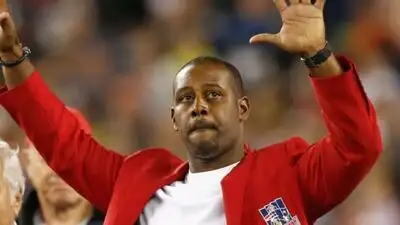
How former Patriots legend Ty Law built a 30-location business after his $44.052M contract with full dedication(Getty Images)
That thinking eventually led to Launch, a family entertainment company he co-founded with Rob Arnold in 2012. What started with one trampoline park in Warwick, Rhode Island, grew into a national franchise business, reaching 30 locations across 13 states and more than $50 million in reported revenue by August 2019, before the Boston Globe reported 33 franchises later that year. Former NFL legend Ty Law had already built a remarkable football career, winning three Super Bowl titles with the Patriots before eventually earning a place in the Pro Football Hall of Fame. As his playing career moved towards its end, however, Law was already thinking about what he could build away from the field and how he could create something that he could control himself.
Law’s biggest Patriots extension came in 1999, when he signed a six-year deal worth $44.052 million, with $14.2 million in guarantees, according to Over The Cap. The site currently lists his career earnings at $60.84 million, although its detailed team and season figures total $58.84 million, so the safer description is that Law earned more than $58 million during his playing career. New England released Law in 2005, after which he played for the Jets and Chiefs before joining the Broncos. The Broncos released him for the third time in 2010, and the Boston Globe described him at the time as looking for a new line of work. The idea behind Launch began in 2011, when Law was discussing business with his friend Rob Arnold, who later became the company’s CEO. The first Launch opened in Warwick, Rhode Island, in 2012, and the company soon began expanding through franchising. By June 2015, Launch already had six parks and had announced plans that would bring the total to 11 locations. By 2019, the company was increasingly presenting itself simply as Launch rather than Launch Trampoline Park. Sports Illustrated reported in May 2019 that Launch had 28 parks across 13 states and more than 1,000 employees. By August, FOX Business reported that the company had reached 30 stores across 13 states, generated more than $50 million in revenue and expected another five or six locations before the end of that year. 2019, the Boston Globe reported that Launch had reached 33 franchises, with more than a dozen additional locations under construction. The $44.052 million Patriots extension became one of the notable financial chapters of Law’s playing career, while Launch went from one Rhode Island location in 2012 to 30 stores across 13 states and more than $50 million in reported revenue by Aug. 2019, followed by 33 franchises reported by the Boston Globe later that year. Stay updated with the latest Asian Games 2026 news , check the Asian Games medal tally and complete Asian Games schedule .
Because the facility was crowded, unpleasant and offered little for parents to do, but the number of children arriving gave him something else to think about, the experience itself did not impress Law. Because it gave him direct ownership after spending his playing career inside organisations that ultimately controlled his future, for Law, the business represented more than another source of income. Because your name’s attached to a number, “The NFL owns your name, the Patriots own your name, the Jets own your name on that jersey,.
Law had been interested in business before his playing career ended, and FOX Business reported that he attended entrepreneurial programmes sponsored by the NFL Players Association during the offseason.
“I said, ‘When I get done, I’m going to take my money, and I’m going to invest it in myself,’” Law told the Boston Globe in 2019. Law said he often thought about the people who created and ran companies while athletes received most of the attention. Law told the Globe. “It smelled like feet,” Law recalled to the Boston Globe. Arnold handled the numbers and operational details, while Law focused more heavily on the design and entertainment side of the business, according to the Globe. “We have laser tag, we have bowling alleys, we have some facilities that have indoor go-karting,” Law told the Globe. “That name, as long as it’s on that jersey, for whatever particular team you’re on, you really don’t even own your name,” Law told the Boston Globe. “No pun intended, it’s had its ups and downs,” Law said. Law told FOX Business that former players should not expect business success to arrive as quickly as success on the field. Join conversation Share your thoughts in the comments Be respectful · TOI community guidelines “Play as much and as long as you can and maximize your earnings there because, in business, it’s going to be a slower crawl,” he said.
His career also showed him how quickly a player’s situation could change. His focus was not simply on putting money into a company, but on understanding how businesses worked and eventually running something himself. “I’m going to do all the hiring and firing. That interest went beyond the financial side of business. “We [the players] get all the cheers, but at the end of the day, who’s that guy up in the suite? “The guys that created something and didn’t have to get beat up. Law had initially considered becoming a restaurant franchisee, but Arnold suggested the trampoline-park business after visiting one in Florida with his young children. Law’s son became excited about the idea and eventually persuaded his father to visit a trampoline park. “It was just not a great experience. But as I was leaving, busloads of kids started coming in … I start counting the number of heads, and I’m like ‘Hmmm, might be something to this.’” Instead of dismissing the concept after that first visit, Law travelled around the country to study other trampoline parks and learn more about the industry. He and Arnold also tried to partner with an existing chain, but that attempt did not work out, leading the two to create their own operation. The partnership brought different strengths to the project. How did one Rhode Island park become a growing franchise? The business did not remain focused only on trampolines as it expanded. Launch locations developed additional attractions, including laser tag, bowling and indoor go-karting, giving families more entertainment options inside the same venues. By Nov. “It’s no longer Launch Trampoline Park. It’s just Launch. He explained that a player’s name could be attached to a jersey without the player actually controlling what happened to it, something he contrasted with what he had built through Launch. They own that. I own Launch. He then explained the reason ownership had become such a powerful idea for him. “No matter what, can’t nobody take that away from me. You gotta control your own destiny. As the company expanded, Law stepped back from its day-to-day operations and concentrated on larger decisions, including demographics and brand awareness. He also took pride in the employment opportunities created as Launch grew across the country. “But it’s been rewarding more so than anything to create the jobs. Law’s business journey was not simply a case of a former athlete putting his playing money into an established company. He investigated an unfamiliar industry, visited other parks, considered an existing franchise, walked away from that opportunity and eventually built a new company with Arnold. That process also shaped his advice to other athletes who wanted to enter business after football. The numbers show how far the idea travelled. Get the latest Sports News and Live updates. Download the TOI app.
The company had grown a long way from the single Rhode Island park Law and Arnold had opened seven years earlier.