
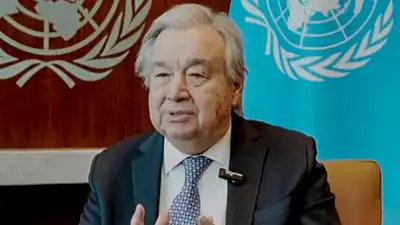
Antonio Guterres told reporters the need for stronger oversight would be a major focus of his talks with global leaders coming to the city.
Guterres said the involvement of major powers and permanent members of the UN Security Council in conflicts had made it harder for the council to act. He said repeated violations of international law were contributing to a broader sense that countries could act without facing consequences. “That creates an environment of impunity, in which midsize powers believe that they can do whatever they want because nothing will happen to them,” Guterres said. Geopolitical divisions have effectively paralysed the Security Council at a time when the number of conflicts is growing, according to the UN chief. He said disruptions to food, fertiliser and energy supplies were adding to pressure on economies around the world. “The combination of the war in Ukraine with the problems of exports of foods, fertilisers, and energy through the Black Sea, if you combine it with the difficulties in the Strait of Hormuz [in the Gulf], in the Bab al-Mandeb [in the Red Sea], and in the attacks [on] oil installations in several countries of the [Middle East] region, we are creating a situation that has a devastating impact on many economies around the world,” Guterres said. He said wealthier countries could eventually absorb higher interest rates and energy costs, but developing nations faced much greater difficulties.
Problems affecting key maritime routes, including the Strait of Hormuz and Bab al-Mandeb, have further complicated the movement of energy and goods. Speaking to Al Jazeera on Monday, a day before delivering his final address to the UN General Assembly as secretary-general, Guterres said the world body was facing serious challenges over its ability to deal with conflicts and uphold international law.