
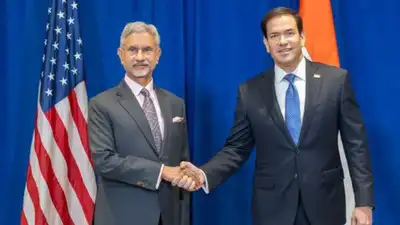
S Jaishankar and Marco Rubio met in New York City
The Sanctioning Russia and Iran Act (SRIA), which President Donald Trump signed last week, gives him authority to impose tariffs of up to 100% on major buyers of Russian oil and gas. India, which is one, has said it remains committed to securing affordable energy for its 1.4 billion people and will take measures to protect its economic interests. Meanwhile, in further signs that Trump’s actions — regarded as whimsical by critics — are hurting Americans as much as the rest of the world, US diesel prices have crossed $6.50 a gallon nationally (approx Rs 165 per liter), adding costs for farmers, truckers and virtually every part of the agricultural supply chain.
Former US official and South Asia analyst Evan Feigenbaum has similarly highlighted what he sees as a double standard in Washington’s pressure on India, particularly after Trump announced that the US was exploring a deal to buy potash from Belarus, a close Russian ally.
TOI correspondent from Washington: In a meeting on the sidelines of the UN General Assembly on Wednesday with US secretary of state Marco Rubio, India’s external affairs minister S Jaishankar raised New Delhi’s “interests and concerns” over Washington’s newly enacted Russia sanctions legislation, exposing a widening rift between the two sides even as the US publicly sought to portray the relationship as firmly on track. Instead, he wrote: “Great to meet with Indian External Affairs Minister @DrSJaishankar in New York today,” saying the two were “building on the US-India strategic partnership” and coordinating on regional priorities and upcoming multilateral efforts. Senator Richard Blumenthal, a principal architect of the sanctions legislation, warned India and China during the congressional debate to “clean up your act” and buy their oil and gas elsewhere.
The difference in their post-meeting social media messaging was striking. Jaishankar’s account was unusually specific: the sanctions legislation was the first issue he mentioned, alongside the Gulf and Ukraine. Rubio’s post on X made no reference to the sanctions issue. The diplomatic gloss barely concealed the widening gap after New Delhi bluntly warned Washington last week that using the new sanctions authority against India could affect bilateral relations. Trump has defended the proposal as a way to obtain cheaper fertilizer for American farmers. The administration is now scrambling to restrict diesel exports amid tanking poll numbers for Trump. Indian officials likewise have repeatedly emphasised that energy decisions will be based on national interests and economic considerations, ignoring abrasive rhetoric from some US lawmakers. The emerging tension is particularly notable against the backdrop of Washington’s elaborate courtship of Beijing.
Chinese President Xi Jinping arrived in the US on Wednesday for a three-day state visit, with Trump personally scheduled to greet him at Joint Base Andrews — a rare gesture — and a full state arrival ceremony and White House state dinner planned for Thursday.