
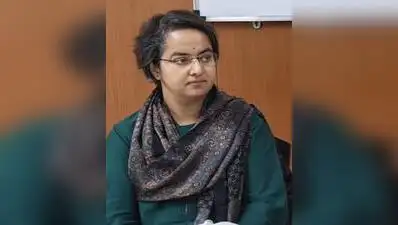
Rashmi Mahesh, additional chief secretary, department of school education and literacy
A draft of Karnataka Open School (KOS) Rules, 2026, is likely to permit transfer of credits from other boards, exam on demand and curriculum aligned to SSLC and II PU. Bengaluru: The department of school education and literacy is planning to revamp the open school system for secondary and higher secondary education in the state.
As per the rules mooted, any person who has attained the age of 15 will be eligible for admission to secondary education. Those who have completed class 10 under any board or open schooling established or recognised by the Centre or State will be eligible for PU. Each learner will be allowed to take a maximum of 10 consecutive attempts to pass the exam, commencing from the date of first registration.
The department of state educational research and training will prepare curriculum for KOS. Learners will be permitted to write the exam in languages notified by the Karnataka Open School Board. A learner who has passed one or more subjects from an educational board or open schooling institution established or recognised by the central/state govt will be eligible for transfer of credit. No learner will be required to reappear in a subject in respect of which credit has been granted. Karnataka School Examination and Assessment Board (KSEAB) will conduct regular exams and on-demand exams. The District Institute of Education and Training (DIET) in each district will be designated as district KOS learning hubs. The head of DIET will be the district nodal officer. Block resource centres or govt junior colleges of block headquarters will be the taluk-level learning centres. Every taluk-level learning centre will have a learning centre coordinator who will be responsible for the enrolment, learner orientation, counseling arrangements, etc. KOS seeks to provide an alternative for learners — out-of-school children, dropouts, employed youth and disadvantaged groups unable to enter or complete secondary and pre-university education — through flexible subject choices, technology-enabled learning, academic counselling, recognised learning centres, educational infrastructure and digital platforms. It will adopt contemporary open-schooling practices, including National Institute of Open Schooling (NIOS) approaches.