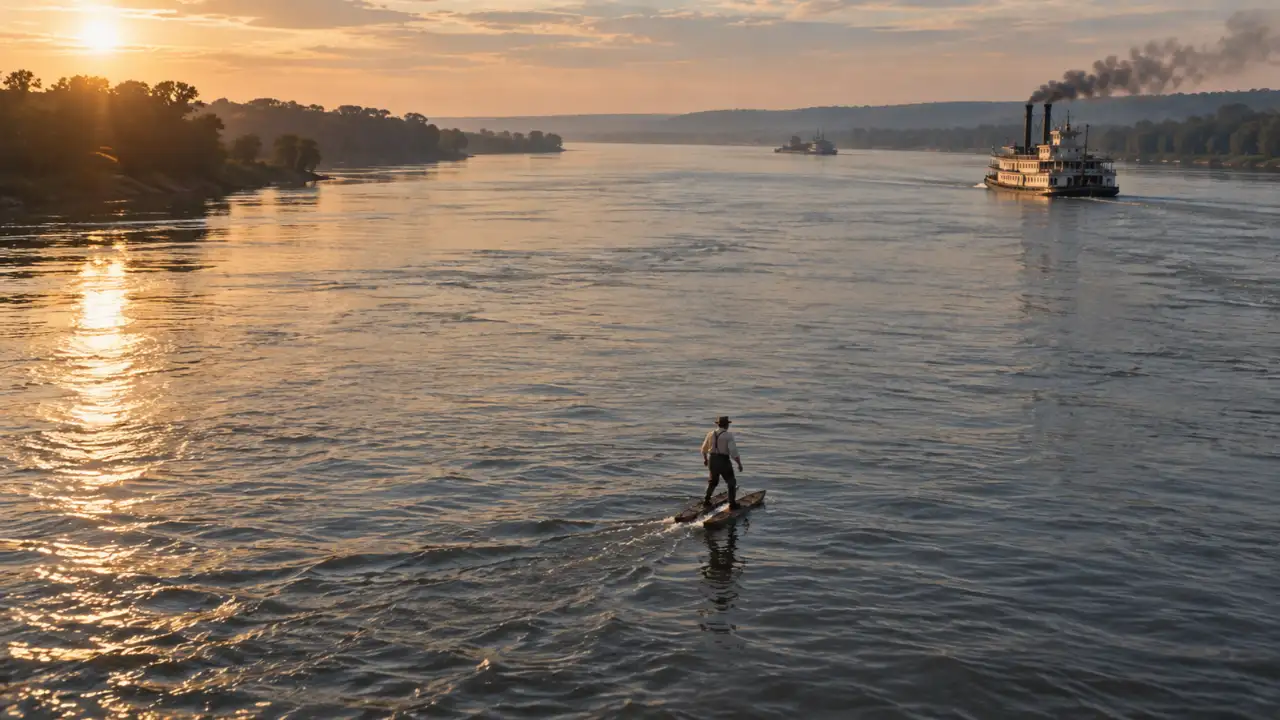
AI REPRESENTATION: Charles Oldrieve’s unusual 1907 journey took him nearly 1,600 miles down the Ohio and Mississippi rivers from Cincinnati to New Orleans | ChatGPT
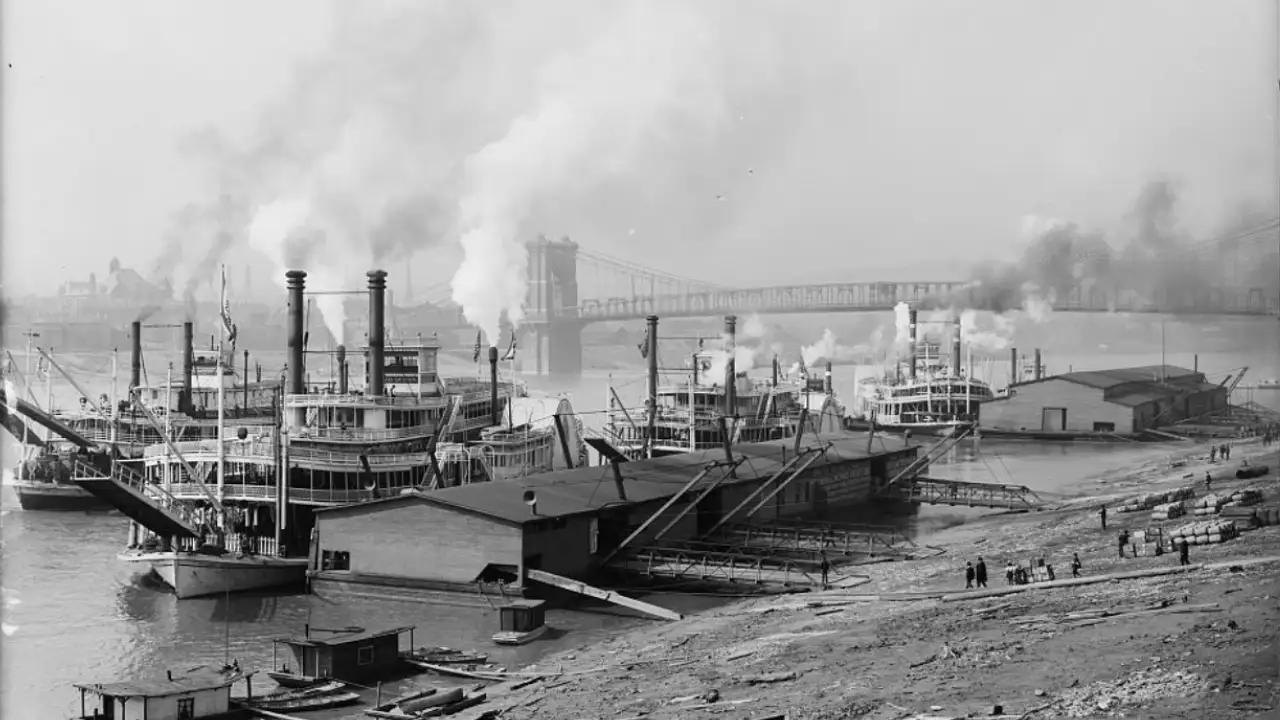
Oldrieve stepped into the Ohio River at Cincinnati on January 1, 1907, and wore a pair of oversized wooden shoes that looked more like tiny canoes than footwear. He had set himself a 40-day challenge of travelling down the Ohio and Mississippi rivers and reaching New Orleans. The route covered nearly 1,600 miles, which Oldrieve completed on February 10, after arriving in New Orleans about an hour ahead of the deadline. A contemporary newspaper report said that he covered the distance in 40 days, and finished 45 minutes inside the agreed limit. AI REPRESENTATION: Charles Oldrieve’s unusual 1907 journey took him nearly 1,600 miles down the Ohio and Mississippi rivers from Cincinnati to New Orleans | ChatGPT He had been practicing for years In 1888, at age 20, he walked more than 150 miles down the Hudson River from Albany to Manhattan, and by the early 1900s, he could walk forward and backward in his shoes and had learned to turn around on the water. During the 1907 expedition, Oldrieve was accompanied by a small gas-powered support boat, while his wife, Caroline, followed in a rowboat. The shoes themselves weighed around 20 pounds each, and water frequently got inside them despite the thigh-high rubber boots he wore underneath. The Cincinnati levee in 1907, around the period when Charles Oldrieve began his journey down the Ohio River | Wikimedia Commons The final miles nearly ended the journey Oldrieve was several days into the final stretch and believed he could finish without difficulty, by the time Oldrieve reached Baton Rouge on February 6. He nevertheless reached New Orleans on February 10, after completing the nearly 1,600-mile journey within the 40-day target. During a July 4 performance in Greenwood, Mississippi, Caroline was badly burned while setting off explosives used in the act, and she died from her injuries several days later. Oldrieve’s 1907 river crossing nevertheless remained the feat that was most closely associated with his name. But the combination allowed Oldrieve to travel from Cincinnati to New Orleans on the surface of two major American rivers in 40 days, having completed a journey that had begun as one of his most ambitious performance challenges.
The Smithsonian Magazine reported that Oldrieve had once dreamed of walking across the English Channel and even the Atlantic. At Henderson, Kentucky, he was two days behind schedule, and eventually recovered the lost time after reaching the Mississippi at Cairo, Illinois. Contemporary accounts reported that he finished less than an hour before the deadline.
Oldrieve was later told that she would recover, but learned of her death while travelling to another performance. Charles W. Oldrieve was a former tightrope performer from Boston who had spent years developing his method of walking on water. His shoes were made from wood and designed to float, were roughly four to four-and-a-half feet long and fitted with fins underneath that helped him push against the water as he moved forward. The shoes provided flotation while the fins gave him traction. Without the fins, he could float but would struggle to make forward progress. Those plans never happened, but his river journey became his longest documented water-walking expedition. Crowds gathered along the rivers as he passed through towns. He could reportedly reach about five miles per hour at his fastest, although he estimated his average speed at closer to two miles per hour. The journey became more difficult as he continued south, as Oldrieve developed back pain and suffered chills and a high fever, but continued toward New Orleans. The lower Mississippi River carried heavy commercial traffic, and Oldrieve was navigating the water on a pair of floating wooden shoes. Near New Orleans, he was nearly swept underneath a barge and had to be rescued by people who were aboard the vessel. Oldrieve and Caroline continued travelling and putting on water-based shows after the river journey, and their performances combined his water-walking act with staged effects and demonstrations. Smithsonian Magazine reports that he subsequently died by suicide after drinking chloroform. A historical account in Memphis Magazine describes how the performer spent years developing his cedar water shoes and built a reputation as the “Human Water Spider. His equipment was simple by modern standards, with wooden shoes, rubber boots, a support boat and a rowboat beside him. You use AI every day. Now get your AI Quotient. Take the AIQ test.