
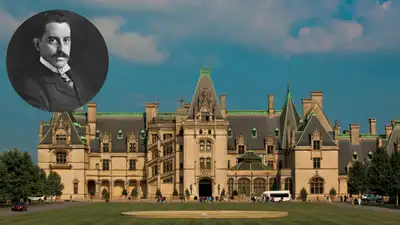
In May 1914, Edith Vanderbilt agreed to sell 86,700 acres of valuable mountain forest from the private Biltmore Estate to the United States federal government for $433,500. The deal was made at $5.00 per acre and moved the huge forest area into public ownership. The land later became the foundation of Pisgah National Forest, which was formally established in 1916. He began buying worn-out farmland and mountain slopes near Asheville, North Carolina, in 1888. Over 26 years, he collected more than 125,000 acres to build a self-sufficient mountain retreat centered around the 250-room Biltmore House.
A major property deal that began more than a century ago with a grieving widow turned a huge private wilderness in North Carolina into one of the most important public conservation achievements in American history. The sale carried out the conservation plan of her late husband, George Washington Vanderbilt.
In 1898, German forester Carl A. After George Vanderbilt unexpectedly died in March 1914 from complications following surgery, keeping the huge private property became a major financial burden for his widow. Houston on 1 May 1914 to formally offer the land to the federal government. The purchase was made possible by the Weeks Act, a federal law passed by the United States Congress in 1911. Official commission records kept in the Forest History Society archives show that the government considered the $5.00-per-acre price an exceptional bargain. The transaction was completed in 1914. Only 10,000 acres around the main Biltmore House and its immediate grounds remained in private family ownership. On 17 October 1916, President Woodrow Wilson issued an executive proclamation creating Pisgah National Forest, with the former Vanderbilt land serving as its central area.
Edith wrote directly to United States Secretary of Agriculture David F, according to historical records documented by the Forest History Society. Under their direction, the Biltmore property became a testing ground for scientific forest management and soil restoration across the American South. Schenck founded the Biltmore Forest School on the estate. It became the first school of professional forestry in North America. Edith Vanderbilt chose to follow her husband’s wish to preserve the mountain wilderness instead of selling the land to commercial timber companies. In her letter, she explained that she wanted the land protected for the public. She wrote: “I wish to sell this tract of land to the Government at a price significantly below its commercial value in order that my husband’s plan for the protection of these mountain forests may be permanently realized. The law allowed the federal government to buy private land in eastern states to protect the headwaters of navigable rivers and manage forest resources. The National Forest Reservation Commission, led by Secretary Houston, quickly approved the deal. Private timber companies had offered much more for the right to cut down the forests.