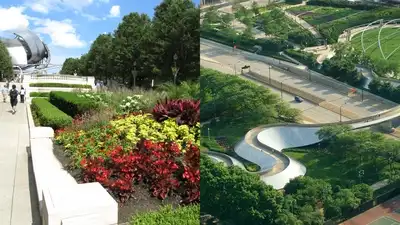
Millennium Park in Chicago, showing the Lurie Garden and the curving BP Pedestrian Bridge. Credits – Wikipedia
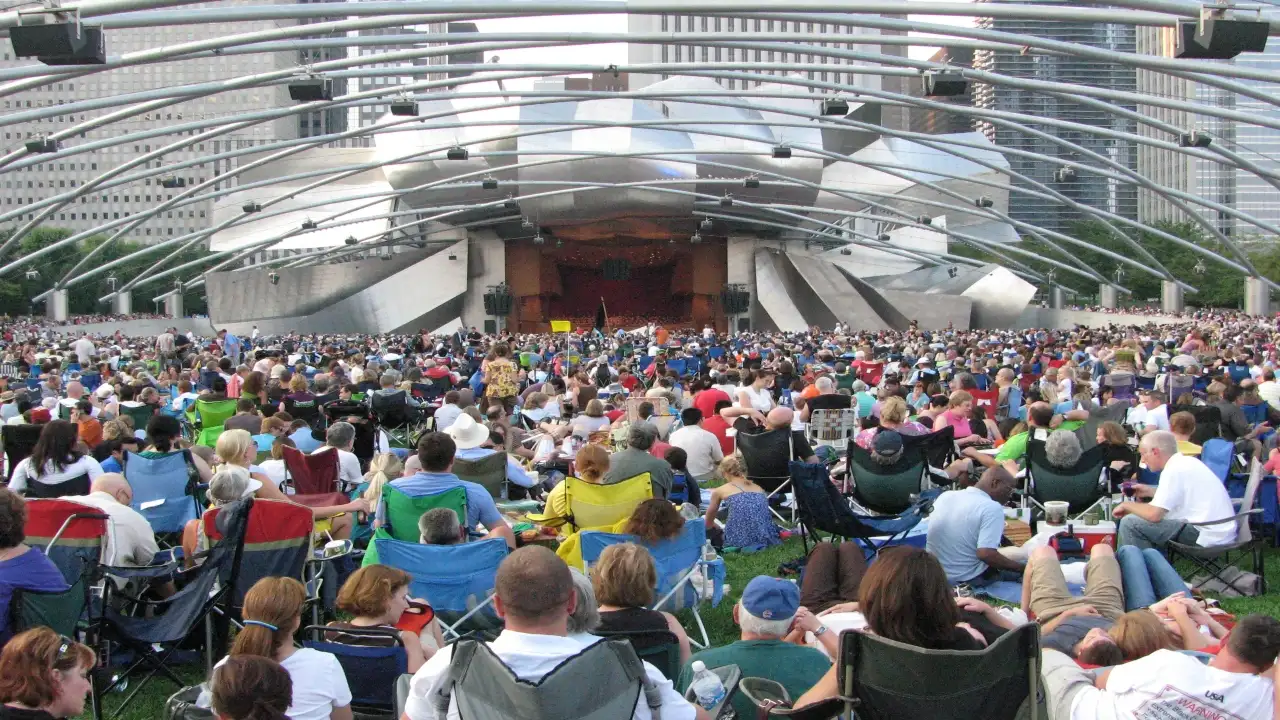
More than two decades after it opened in 2004, the park’s pull hasn’t faded: Wikipedia’s park profile, drawing on city tourism data, puts annual attendance at roughly 25 million, a figure that makes it one of the most visited metropolitan parks in the United States. Nearby, Jaume Plensa’s Crown Fountain utilizes television screens and flowing water to give kids a place to play that also serves as public art, while Frank Gehry’s Jay Pritzker Pavilion introduced a dramatic, ribboned steel bandshell to what was once a stretch of railway sidings. The area along the northern boundary of Chicago’s Grant Park was unwelcoming for much of the 20th century. The location was largely overlooked by a city more concerned with its skyline than its ground-level areas, with commuter rail tracks cutting across it and rows of outdoor parking occupying what little space was left. As early as the 1970s, civic organizations proposed reclaiming the area for public use, but political will and financial resources never quite matched up. That goal didn’t really take off until the last years of the 1990s, which paved the way for one of the most talked-about civic revolutions in recent American history. Landscape architects have pointed to the park as a turning point in how public space is designed and funded. The American Society of Landscape Architects, in reviewing the project years later, noted that the park established a new template for how private and public money could combine to create civic space and how that space could then double as an economic engine for the surrounding district. It was no simple feat to bring art, architecture and engineering together in this way, and it required regular collaboration between the city, private funders and a huge range of designers. That collaborative process is why planners continue to study the park well after Chicago. A large part of its appeal is access. Almost everything in the park, from summer concerts to art exhibits, is still free, a conscious move that officials believe has helped keep the space genuinely open to the whole city rather than just those who can afford a ticket. The park’s layout of smaller chambers filled with art draws directly on ideas first proposed for Grant Park more than a century ago, giving the contemporary design an unexpectedly deep historical thread, the Chicago Architecture Centre notes.