
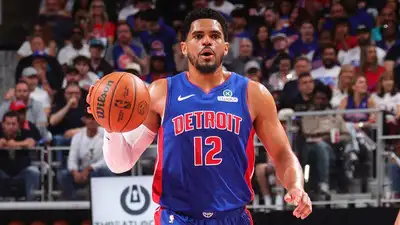
Tobias Harris (Getty Images)
The Detroit Pistons veteran has invested more than $1 million into a homeownership initiative designed to help Detroit buyers overcome the upfront cost of purchasing a house. The programme can provide assistance worth up to 40% of a home’s purchase price without adding a monthly debt payment to the buyer. Harris has put more than $1 million into the pilot, according to the NBA’s 2026 Social Justice Champion announcement. In Detroit, the state housing authority also reported that 59.5% of households were spending more than 30% of their income on rent.
Because it changes when the financial burden is felt, that structure matters. For Harris, the project is therefore about more than helping someone buy a property. MSHDA reported that Michigan home prices had risen much faster than median household income over the previous decade.
The initiative joined forces with MSHDA, Guild Mortgage and Homium to create a shared-appreciation mortgage pilot for qualified first-time buyers in selected Detroit areas, according to the Michigan State Housing Development Authority. In the NBA’s account of his community efforts, the league said he has focused on economic equity and expanding access to affordable homeownership for working-class families. Tobias Harris is using his NBA platform to tackle a problem that extends far beyond the basketball court. At the same time, his real estate work with his brother, Terry Harris, has expanded into hundreds of affordable housing units in Los Angeles. Together, the projects show how Harris is turning his interest in real estate into a long-term effort focused on homeownership, housing supply and economic opportunity. Harris’ Detroit work is built around a simple problem. For many families, getting through the front door is harder than handling the mortgage itself. A down payment, closing costs and mortgage insurance can make buying a home feel out of reach, even for people with steady incomes. The Tobias Harris Homeownership Initiative is designed to address that first major hurdle. Instead, the assistance is repaid when the homeowner sells or refinances the property. The repayment includes the original assistance and a share of the home’s appreciation. Rather than asking a buyer to carry another monthly payment, the model moves repayment to a later point in the ownership journey. His contribution is part of a wider group of public, private and philanthropic funding behind the initiative. The need is clear. He has described homeownership as a route toward stability and generational wealth, and the initiative is built around giving working families a chance to establish that foundation. The Harris initiative is different from a simple cash giveaway. The shared-appreciation model means eligible buyers can receive substantial help with the upfront cost of a home while avoiding another monthly loan payment. That can make a meaningful difference for first-time buyers who have enough income to manage a mortgage but lack the savings needed for a traditional down payment. There is also a wider lesson in the programme. Housing affordability is not only about the price printed on a property listing. Financing, interest rates, insurance, taxes and upfront costs can all determine whether a family can actually afford to buy. Harris’ approach attempts to tackle one of those barriers directly. The initiative initially focuses on qualified first-time homebuyers in selected Detroit neighbourhoods. Its partners plan to assess the pilot before considering expansion into other markets. That makes the early results important. The programme is being tested as a model that could potentially be adapted elsewhere, rather than presented as a solution for every housing market. Harris has also connected the work to his belief in ownership.
Their work began with projects in Echo Park, where they were developing more than 270 affordable units across three properties when Andscape profiled them in 2024. The NBA said in May 2026 that Tobias Harris is now involved in the development of more than 560 affordable housing units across five Los Angeles projects . His more than $1 million investment in Detroit and involvement in more than 560 affordable units in Los Angeles show an expanding commitment to the housing space. Stay updated with the latest Asian Games 2026 news , check the Asian Games medal tally and complete Asian Games schedule .
Because affordable housing and location are closely linked, that approach is important. That figure represents a significant expansion from the three Echo Park projects previously reported.
Tobias has said his brother’s commitment to the Los Angeles market helped persuade him to become involved. That focus gives his housing work a different shape from a traditional charitable donation. The goal is to help people enter the housing market and build an asset of their own. The Detroit initiative is only one part of Harris’ housing work. In Los Angeles, Harris and his younger brother Terry have taken a developer’s approach to the affordability problem. The brothers’ plans have since grown. Terry Harris has been central to the development side of the family business. His path into real estate began while he was playing in the NBA G League. He bought and renovated a property in Delaware, then used the experience to move deeper into real estate development. The brothers have also been clear about the type of housing they want to create. Their stated goal is not simply to build affordable units wherever land is cheapest. In an interview with Andscape, Terry Harris explained that the projects are intended for neighbourhoods with access to restaurants, transportation, schools and other amenities. A lower rent or purchase price means less if residents are far from jobs, public transportation, schools or essential services. The Harris brothers are trying to make the surrounding neighbourhood part of the equation. Harris’ interest in real estate also reflects a broader conversation about what professional athletes can build after, and alongside, their playing careers. Tobias and Terry Harris have spoken openly about ownership, entrepreneurship and creating opportunities outside sports. Their Los Angeles projects give that idea a practical form. Rather than simply investing in property, they are focusing on housing that serves residents who may otherwise struggle to remain in desirable parts of the city. There is also a family element to the work. Terry, meanwhile, has described the partnership as a way to build a family legacy through real estate. Join conversation Share your thoughts in the comments Be respectful · TOI community guidelines That long-term view helps explain why Harris’ housing footprint now stretches between Detroit and Los Angeles. In Detroit, the focus is helping qualified buyers overcome the financial barrier to homeownership. In Los Angeles, the emphasis is on adding affordable homes to a market where housing costs have created severe pressure for many residents. The methods are different, but the underlying idea is similar: ownership and access to quality housing can shape a family’s financial future. For Harris, that makes affordable housing more than a side project. His NBA career may keep him in the spotlight, but the housing projects he is helping build could become a very different part of his legacy. Get the latest Sports News and Live updates. Download the TOI app.