
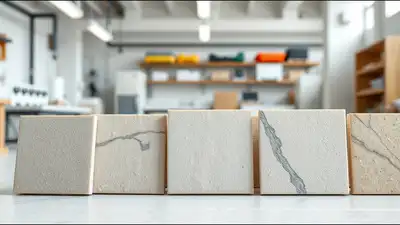
Representative Image of innovative tiles made from recycled gypsum plaster, illustrating the BioSintering process (AI Generated Image)
DeKiln’s technology page describes curing at 30°C , while its 2026 partnership announcement with Johnson Tiles describes the tiles being hardened on a drying rack at 35°C . DeKiln’s newer manufacturing information more broadly describes its process as operating 90 °C below, reflecting different stages or configurations of the technology as it is being developed. In May 2026, DeKiln announced a pilot manufacturing project with Johnson Tiles in Stoke-on-Trent to help scale the technology. In 2025, DeKiln received funding through the Royce Industrial Collaboration Programme for the SPARK project, which aimed to move BioSintering from laboratory batch production towards pre-pilot-scale manufacturing. In 2026, the company announced a partnership with Johnson Tiles to establish a pilot manufacturing site in Stoke-on-Trent. The Royal Academy of Engineering has also selected DeKiln founder Aled Roberts as a 2026 Green Future Fellow, with the Academy describing the technology as producing tiles from more than 98% recycled gypsum without kiln firing.
The company has therefore demonstrated a kiln-free route to hardening its ceramic-like tiles, but the exact curing temperature can vary according to the particular process description. After the recycled material and binder are mixed, the precursor is compressed using standard tile presses. This allows the company to use familiar manufacturing equipment rather than requiring a completely different production system. The major difference comes after pressing: instead of sending the formed tiles into a high-temperature kiln, BioSintering uses a low-temperature curing stage. BioSintering is designed to work with conventional tile manufacturing equipment, with DeKiln saying producers can use existing presses and other equipment without the kiln, requiring only limited modifications and retraining. The company has worked with organisations including the University of Manchester, Teamwork Italy and Johnson Tiles, while its technology has received support through UK innovation and engineering programmes. The developments show that DeKiln is moving beyond laboratory research, but the company is still working through the scale-up process needed for widespread industrial production.