PC: Wikipedia
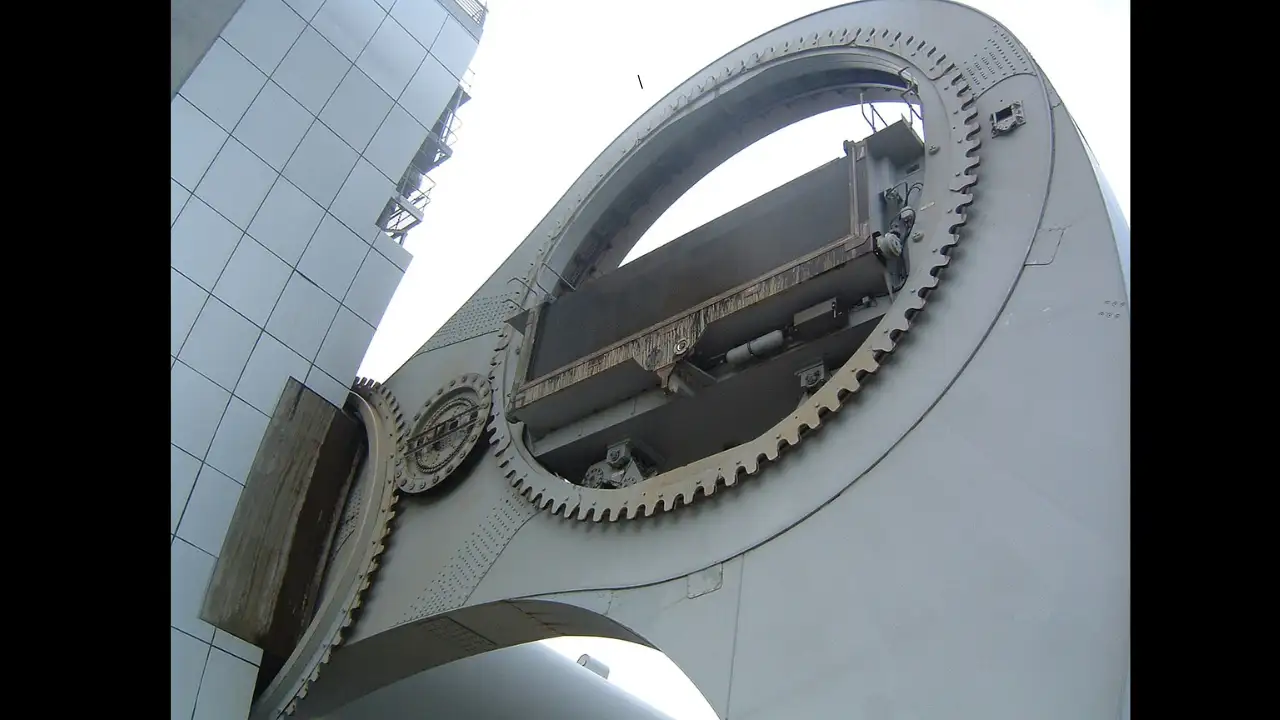
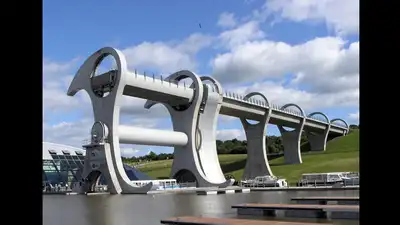
Opened in 2002, the Falkirk Wheel transformed how boats travel between two historic canals in central Scotland. The rotating boat lift connects the Forth and Clyde Canal with the Union Canal, which lies about 100 feet higher. Instead of relying on the former flight of 11 locks, the structure uses two water-filled gondolas that rotate to raise and lower vessels. The system was designed to keep the gondolas balanced, allowing the 1,800-tonne structure to operate using just 1.5 kWh for each rotation, according to Scottish Canals.
The energy used is commonly compared with that required to boil eight kettles.
The structure weighs 1,800 tonnes and uses just 1.5 kWh for each rotation, according to Scottish Canals. The Linda Hall Library gives a figure of about 1.5 kilowatt-hours for one half-turn and notes the commonly cited comparison that this is about the same amount of energy required to boil eight kettles of water.
The Linda Hall Library says British Waterways Scotland worked with architectural and engineering firms to develop a unique boat-lift design. The restoration project sought a new way to connect the waterways rather than simply rebuilding the old staircase of locks. A central feature of the design is the balance between the two gondolas. The two gondolas, when full of water, weigh the same regardless of how many boats they contain. It attributes this to Archimedes’ principle: when a boat enters a full gondola, it displaces water equal to its own weight, leaving the total weight unchanged.