
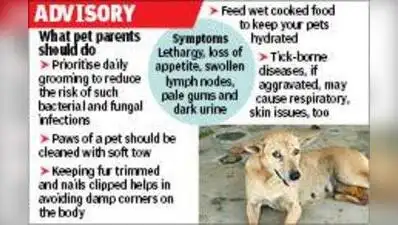
Advisory
High humidity and moisture caused by spells of rain create “ideal breeding” conditions for ticks that are infecting animals, mostly dogs and cats, according to veterinarians. In the past couple of weeks, veterinarians are getting flooded with patients with tick fever and infections, and they said that the “freaky weather” has made pets, especially dogs and cats, vulnerable to these diseases. Fleas are also carriers of tapeworm, and while biting a dog or cat, they transmit the disease,” the professor said. If a pet has symptoms like redness, itching, rashes, hair loss or unpleasant odour, parents should take medical advice,” said Rohit Raj, a veterinary doctor and assistant professor of JIS College of Veterinary & Animal Sciences affiliated to West Bengal University of Animal and Fishery Sciences.
Kolkata: The present weather condition has triggered a spurt in tick fever among pets, including strays, across the city. The doctors are advising pet parents to stay on alert for symptoms like lethargy, loss of appetite, swollen lymph nodes, pale gums and dark urine. These are indicative of tick-borne diseases that, if aggravated, may also cause serious respiratory and skin issues. An assistant professor of Belgachhia Veterinary Hospital pointed out that bacterial infections like rashes on skin are sometimes found to result from tick fever and if the condition turns out to be complicated, a pet may also suffer from breathing trouble or respiratory distress. If tick infections aren’t cured completely, this may also lead to secondary infections, an aggravated form of tick-borne disease among pets. “Monsoon is breeding time for ticks and fleas. Allergies and scratching should be addressed at the initial stage, otherwise it can lead to Ehrlichiosis and Babesiosis, which is tick fever. “Monsoon brings slow-developing conditions such as ear infection, fever or digestive imbalance. Pet parents should take some extra care about their furry members.