
It is among 17 rivers in the state that have critically-polluted stretches, according to the latest Central Pollution Control Board assessment. Kolkata: The Adi Ganga flowing through Kolkata today offers perhaps the starkest snapshot of Bengal’s river crisis.
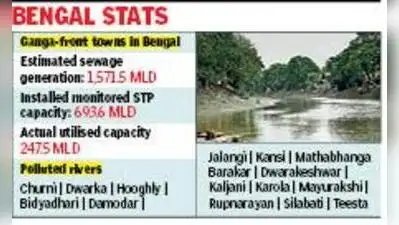
At Jirat Bridge, a West Bengal Pollution Control Board sample collected in Nov last year had found the water blackish and foul-smelling, with biochemical oxygen demand at 18.5 mg/l, dissolved oxygen at just 2 mg/l and faecal coliform at a staggering 84 lakh MPN per 100 ml. Bengal needs to treat rivers as living ecosystems, not just drains that have to be cleaned,” said Naba Dutta, general secretary of Sabuj Mancha, which has launched a state-wide movement for revival of rivers. These rivers are Hooghly, Churni, Damodar, Jalangi, Mathabhanga, Barakar, Dwarakeshwar, Dwarka, Rupnarayan, Teesta, Bidyadhari, Kansi, Silabati, Kalijani, Mayurakshi and Karola. On World Rivers Day, numbers show that many of Bengal’s rivers continue to suffer from sewage discharge, organic pollution, shrinking flows and pressure from urbanisation. CPCB data show particularly serious organic pollution in stretches of the Mahananda, Bidyadhari and Churni. “Treating sewage is necessary, but it cannot by itself revive a river. A river needs adequate ecological flow, space for its floodplain and protection from encroachment, waste dumping and indiscriminate construction along its banks. If we clean the sewage but continue to choke the river’s natural course and destroy its floodplain, restoration will remain incomplete. You Can Also Check: Gold Rate in Kolkata | Silver Rate in Kolkata | Bank Holidays in Kolkata | Public Holidays in Kolkata | Kolkata AQI | Weather in Kolkata | Petrol Price in Kolkata | Diesel Price in Kolkata | CNG Price in Kolkata | LPG Price in Kolkata