
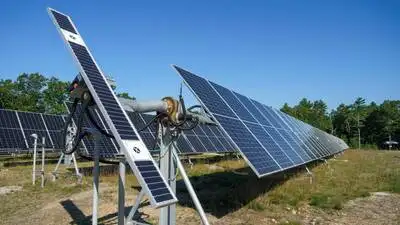
Federal judge orders revival of $7 billion Solar for All program canceled by EPA in 2025. (Photo: Rhode Island Current)
More than a year after federal regulators canceled a $7 billion solar energy grant program, a Rhode Island federal judge has ordered the government to revive the initiative, ruling that the U.S. District Court for Rhode Island, comes in a lawsuit filed by union laborers, solar installation companies, a homeowner and nonprofit advocates who challenged the EPA’s August 2025 decision to terminate the Solar for All program, as reported by Rhode Island Current. Solar for All was created under the 2022 Inflation Reduction Act to expand access to solar power among low- and moderate-income households and disadvantaged communities. The EPA awarded and obligated the full $7 billion in grants in 2024 to states, local governments, nonprofits and tribal organizations. Rhode Island was allocated approximately $49.3 million through the state Office of Energy Resources. The state had spent about $89,000 on administrative preparation when the money was clawed back, according to state officials cited in the lawsuit coverage. Nationwide, the five-year program had been projected by the Biden administration to help approximately 900,000 households save $350 million annually on energy bills and create about 200,000 jobs. The Trump administration’s EPA ended Solar for All in August 2025, several months after President Donald Trump took office. Federal regulators argued that the One Big Beautiful Bill Act, signed into law on July 4, 2025, had rescinded congressional authority for the program and allowed the government to claw back unspent funds. For now, the future of the $7 billion Solar for All program remains tied to the federal government’s next legal move.
Because congress repealed the statutory provision underlying the program, in her ruling, she determined that funds already obligated under the program were not automatically transformed into unrestricted money simply.
The EPA said it is reviewing the decision and considering its options for appeal, while attorneys for the plaintiffs say they do not yet know how the administration will respond. Its president, Patrick Crowley, said the program could significantly expand solar deployment in the state while creating work for electricians, ironworkers and other skilled tradespeople. “We already have trained tradespeople to start doing this work,” Crowley said, according to Rhode Island Current. Wood, executive director of the Rhode Island Center for Justice, another plaintiff, said the ruling could help restore an avenue for lower-income Rhode Islanders facing high housing and utility costs.
Environmental Protection Agency overstepped its statutory authority when it terminated the program. The ruling, issued by U.S. District Judge Mary S. McElroy of the U.S. However, the ruling does not immediately mean the money will begin flowing again. Judge McElroy rejected that interpretation. The Rhode Island AFL-CIO was among the plaintiffs challenging the cancellation. The program’s cancellation had also disrupted preparations by nonprofits and businesses involved in solar installation, financing and education. The original program was part of the federal government’s broader effort under the Inflation Reduction Act to reduce greenhouse-gas emissions while expanding clean-energy access in low-income and disadvantaged communities. Jennifer L. The Southern Environmental Law Center, Lawyers for Good Government and the Conservation Law Foundation also represented the plaintiffs. You use AI every day. Now get your AI Quotient. Take the AIQ test.
Rhode Island had already begun preparing to administer its grant before the funding was terminated. The EPA is reviewing Judge McElroy’s ruling, meaning the dispute could continue through an appeal before the funding is fully restored or projects resume.
Rhode Island officials are also waiting for clarity before moving forward with the state’s $49.3 million allocation.
Kevin Hubbard, executive director of the Lawyers’ Committee for Rhode Island and an attorney representing the plaintiffs, said the ruling leaves uncertainty over what happens next. “The result is maddeningly difficult to talk about what happens next because we just don’t know what they’ll do,” Hubbard said. Robert Beadle, a spokesperson for the Rhode Island Office of Energy Resources, said the state needs to know the outcome of the legal challenge before proceeding with the grant.
she did not specify exactly how federal administrators must restart Solar for All Although McElroy rejected the cancellation. One possibility would be allowing existing grant recipients to continue with the awards they had already received. Another could involve requiring recipients to reapply for the competitive funding, potentially causing additional delays. The legal battle centers on a program designed to make residential solar more accessible to households that might otherwise struggle to afford installation.