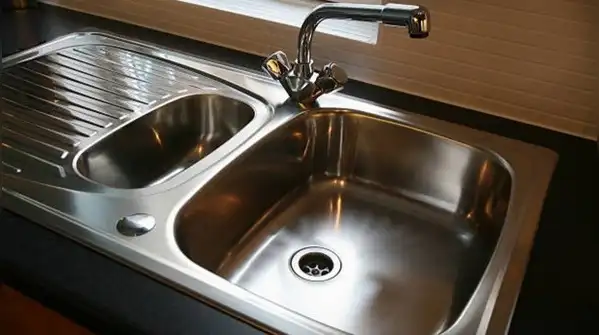
Most of us wash a mountain of dishes in the kitchen sink every day and then barely give the sink itself a second glance, until one morning it looks tired, spotty and faintly greasy, no matter how much you rinse it. The culprits are usually the same few things: food film, grease, and the chalky white marks left behind when hard water dries on the steel. The good news is that a stainless steel sink is surprisingly easy to bring back to life, and you rarely need anything beyond dish soap, baking soda and vinegar. Here’s a simple routine that works.
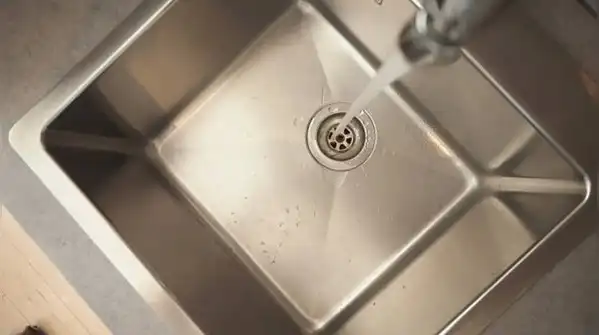
Once your sink is sparkling, a few small habits make sure it stays that way. Rinse it down after every use, wipe away food residue before it dries, and give the surface a quick dry with a cloth at the end of the day. Then set aside a few minutes once a week for the baking soda and vinegar routine above. That little bit of upkeep is far easier than scrubbing away weeks of build-up in one go.
Before you get into any serious scrubbing, clear the sink of dishes and food scraps, then rinse it down with warm water. Add a few drops of dish soap to a soft, non-abrasive sponge and give the whole basin a light scrub to lift off the surface layer of grease and food residue. Don’t skip this step. Cleaning over a layer of oil means your baking soda and vinegar end up fighting grease instead of stains, and the whole job takes longer than it needs to. sprinkle baking soda generously over the surface, paying extra attention to the stained or greasy patches around the drain and along the edges While the sink is still damp. Then scrub gently with a soft sponge or cloth, always moving in the direction of the metal’s grain, those faint lines you can see running across the steel. Baking soda is abrasive enough to lift stuck-on grime and stubborn marks, but gentle enough not to scratch the finish, which is exactly why it’s the workhorse of this routine. This article is intended for general informational purposes only. Test any cleaning method on a small, hidden area first, as results can vary depending on your sink’s finish and the hardness of your water. Avoid steel wool, bleach and other harsh cleaners on stainless steel, and check your sink manufacturer’s care instructions if you’re unsure.