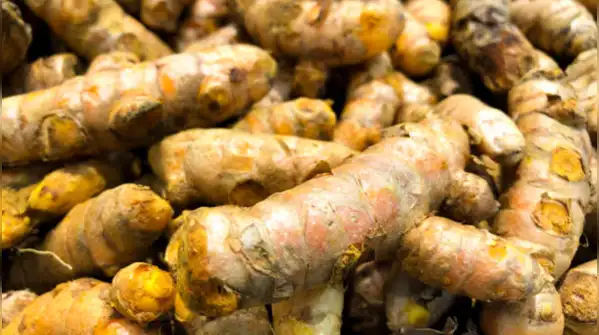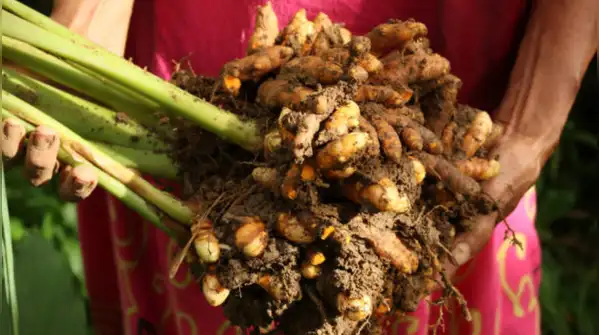
For Jaspreet Kaur, turmeric is no longer just something that grows on her father’s farm in Punjab’s Moga district. It has become part of the work she is building her own career around. Her father, Harnail Singh, had always wanted his children to look at farming differently. For years, his family had grown the usual wheat and paddy. But he worried about whether conventional farming could offer the next generation a secure and profitable future. His answer was to experiment, first with organic vegetables and mustard, and eventually with turmeric. And his younger daughter, Jaspreet, is helping run the processing side of the enterprise while pursuing an MSc in Food Processing. That makes this story less about a crop and more about what happens when a parent gives the next generation a reason to come back to the farm.
As per 30stades, today, the farm has three acres under turmeric.
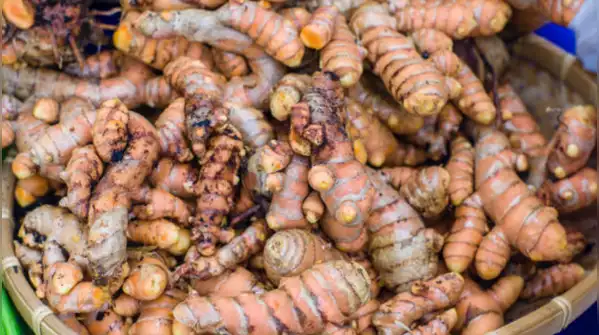
Her father built the experiment. His daughter is helping shape what comes next
Fresh turmeric harvested in December can be turned into pickle, which the family sells for around Rs 400 per kg. Roughly 5 kg of fresh turmeric produces 1 kg of dry powder, which the family sells for about Rs 350 per kg, according to Jaspreet. In 2025, they sold around 100 quintals of rhizomes at Rs 60 per kg, generating approximately Rs 6 lakh in revenue, according to Harnail.
Because the family sells directly to customers, the work does not end when the crop leaves the soil, and. Harnail had seen a familiar pattern around him. Farming was becoming less attractive to young people, particularly when conventional crops came with rising risks and uncertain returns. Instead of telling his children to leave agriculture behind, he tried to change what farming looked like. He began experimenting with organic cultivation on a small patch of land. Later, he grew mustard and started thinking beyond simply selling what came out of the soil. The family also had a grocery store, which gave Harnail a different perspective. He could see what people were actually buying for their kitchens. So the question slowly changed from What should we grow? to What can we grow and turn into something people will buy? That thinking eventually led the family to turmeric. Turmeric harvested later is processed into dry powder. Then there is the part that is left for planting. The family has also started preparing turmeric rhizomes as planting material for other farmers. So the same yellow crop can leave the farm in several forms, as food, as a packaged product and as the beginning of another farmer’s crop. That is where Jaspreet’s education becomes particularly relevant. Jaspreet is pursuing an MSc in Food Processing and looks after turmeric processing for the family. She also works on recipes for spice mixes and pickles and helps with processing methods aimed at retaining nutrients. It is a very different use of a food-processing degree from the image many people may have of working in a laboratory or a large food company. The turmeric has to be harvested, cleaned, processed and converted into something that people will actually want to buy. Jaspreet has also spoken about why processing matters to farmers. In the family’s model, selling turmeric only as a raw commodity means accepting a much lower price than what can potentially be earned after processing. There is something quietly significant about the way this family has divided the work. Harnail remains closely involved with cultivation. His son Gurpreet helps with marketing. Jaspreet handles processing and product development. Their elder daughter, who studied fashion designing, has her own boutique. So this is not a story about a daughter simply taking over her father’s farm. It is about a family finding different places for different skills inside the same business. And perhaps that is what Harnail was trying to create when he first began experimenting with farming. Not just another crop. A reason for the next generation to see agriculture as something they could build with.