
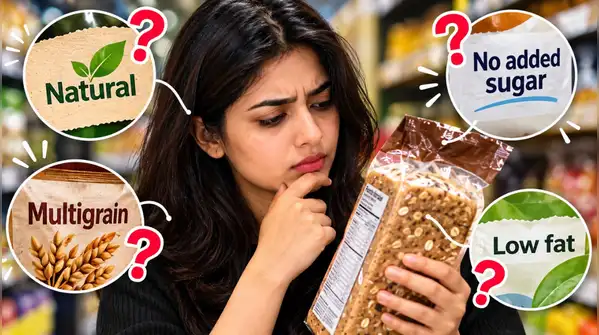
“Natural”, “multigrain”, “zero cholesterol”, “no added sugar”, “high protein” and “made with whole grains” can all sound like shorthand for healthier food. Walk into any supermarket and food labels are designed to make choosing seem easy. But these phrases do not always mean what shoppers assume they do. In India, food labels are regulated by the Food Safety and Standards Authority of India (FSSAI), and understanding the difference between a marketing claim and a nutritional fact can make grocery shopping considerably less confusing. Here are some of the most commonly misunderstood terms.
The nutrition panel’s total sugars figure therefore still matters.
The word “natural” has a strong health halo. But “natural” and “healthy” are not interchangeable. “Multigrain” simply suggests that a product contains more than one type of grain. “No added sugar” means that manufacturers have not added sugars as ingredients under the conditions defined by food regulations. “No added sugar” is a statement about what was added, not a guarantee that the food is low in sugar. So if you’re buying a product specifically to reduce calorie intake, don’t treat “sugar-free” as a synonym for “low-calorie”.
Many people read it as meaning minimally processed, free from additives or nutritionally superior. A food can contain ingredients derived from natural sources while still being high in sugar, fat or calories. Instead of stopping at the front of the packet, turn it around and check the ingredient list and nutrition information. Those details tell you much more about what you are actually eating. This is one of the easiest labels to misread. It does not automatically mean that all those grains are whole grains. A multigrain bread, cracker or cereal could contain several refined grains alongside smaller amounts of whole grains. If you specifically want whole grains, look for terms such as whole wheat or whole grain in the ingredient list and check which ingredients appear near the beginning. In other words, multi tells you about the number of grains, not necessarily how much of the grain remains intact. This distinction is particularly important for breakfast cereals, flavoured dairy products, drinks and packaged snacks. It does not mean the product contains no naturally occurring sugars. For example, fruit-based products can contain naturally occurring sugars even without added sugar. A sugar-free product can still contain calories. Depending on the product, sugar may be replaced with non-sugar sweeteners or other ingredients that provide energy. Some sugar-free biscuits, chocolates and desserts can also contain substantial amounts of fat. Check the energy value as well.

The front of a package is designed to catch your attention. The back is where the useful information usually lives. Before buying a product, check the ingredient list, serving size, calories, protein, total sugars, saturated fat, sodium and fibre. Then compare similar products rather than judging one packet by a single health claim. The simplest rule is also the most useful: don’t let one impressive word on the front of a packet make the entire food sound healthier than its ingredient list suggests.