
A sudden stiffness or a dull pain in the chest could be a sign of a heart attack and not a gastro-intestinal uneasiness
It could be difficult for a patient to distinguish between the two, said Charnock Hospital head of cardiology Tapobrata De. A minor cardiac episode could trigger these mild symptoms, which, if ignored, could develop into a full-fledged heart attack,” said De. When heart attack symptoms are suspected, it is always safer to seek immediate medical attention,” he said.
“A cardiac pain will always radiate from the centre of chest to either the left arm and shoulder or slide down to the stomach region. It could also spread to the jaws and the pain will aggravate with movement. But patients often tend to ignore or delay seeking medical attention for early warning symptoms and reach the hospital only after experiencing a heart attack, pointed out Atanu Saha, cardiac surgery consultant at RN Tagore Narayana. “Such delays can reduce the opportunity for timely intervention. Saha added that it was a myth that regular exercises prevent heart issues. “While exercise can help, some people may have an undetected heart condition despite what seems like a healthy lifestyle. Likewise, sudden and intensive exercise done without adequate preparation can stress the cardiovascular system of people with heart risk factors.”
Around 30%-40% of our cardiac patients are now aged between 20 and 40. “Diabetes tends to numb the cardiac arteries, so the pain triggered is around 30%-40% less than others. Apollo Hospital’s emergency cardiac admissions reveal that approximately 60% of all acute heart attack patients — presenting with both critical ST-elevation myocardial infarction (STEMI) and non-ST-elevation myocardial infarction (NSTEMI) — now fall within the young age bracket of 30 to 45 years.
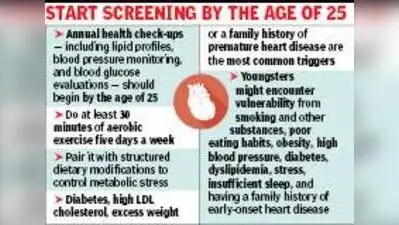
Routine health checks show that cardiovascular risk often starts much earlier than the point at which a person develops a cardiac symptom, according to Joy Shome, senior consultant – cardiology and head of TAVR/ TAVI, BM Birla Heart Hospital. Also, younger patients could get muted symptoms leading to a ‘silent heart attack’ or a painless one. “Those with a family history of cardiac issues at a young age need to be careful. They often develop blockages that rupture suddenly, triggering a major heart attack, often without any prior symptoms or with subdued pain. And a significant number of them succumb to a sudden cardiac arrest since they ignore symptoms,” added De. “Someone may come in for a general health check, feel perfectly well and still have high blood pressure, raised blood sugar or an unfavourable lipid profile. These findings may not seem significant to the individual, particularly when there is no immediate discomfort, but they are important markers when we look at long-term heart health,” added Shome. Silent or symptomless heart attacks are also caused by diabetes. The reason behind the spurt in the number of young patients were irregular lifestyle, stress, unhealthy food habits, binge drinking and lack of sleep. These create arterial blockages fast and silently. Basic tests like a lipid profile need to be done. An ECG or an EEG fail to detect anomalies since they are done with the patient at rest,” explained De. This drastic demographic shift represents an unprecedented public health challenge, with emergency rooms routinely treating individuals in their early thirties suffering from severe coronary artery blockages and life-threatening cardiac events, warned Uday Sankar Das, interventional cardiologist at Apollo.