
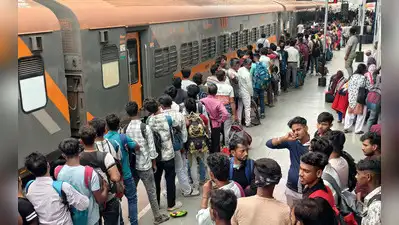
REPRESENTATIONAL IMAGE
Kochi: Assam-Ernakulam is one of the largest interstate migrant corridors in South India, driven by the large number of workers from Assam and other northeastern states employed in Keralam’s hospitality sector, according to South India Interstate Migration Survey 2026, jointly released by United Nations Population Fund (India), International Institute of Migration and Development and International Organization for Migration on Monday. The study, headed by migration expert S Irudaya Rajan, covered 1,824 migrants across Keralam, Tamil Nadu and Karnataka, with more than 600 workers surveyed in each state. Nearly 92.2% of all interstate migrant workers in south India originate from just six eastern and northern states: West Bengal (26.2%), Bihar (21.8%), Assam (17.1%), Odisha, Uttar Pradesh and Jharkhand,” Navas said.
“Migrant labour movement in South India was mostly between Keralam, Tamil Nadu and Karnataka until the 1990s, when liberalisation policies were introduced in the country.
Assam-Ernakulam has emerged as a major migration corridor in South India, as most migrant workers in Keralam’s hospitality sector are from Assam and stakeholders prefer workers from Assam and other northeastern states, particularly Manipur and Meghalaya, said Navas M Khadar, a senior research fellow associated with the study. West Bengal-Bengaluru Urban is the largest interstate migration corridor in South India, followed by Bihar-Tiruppur and Odisha-Tiruppur, the report said. “Better opportunities and wages, and networks among friends and co-workers are the reasons for repeat migration, which is also economically oriented and provides access to different jobs,” said Navas. It is also a coping mechanism,” he said.
It covered six sectors, with hospitality being the focus in Keralam, garments/textiles in Tamil Nadu and scrap collection in Karnataka. Employers often provide accommodation to these workers. It shows that repeat migration is highest in Keralam and lowest in Karnataka. Our study reveals that interstate migration to south India is now defined by strong North-to-South and East-to-South labour migration corridors. Freedom, better social conditions, livelihood needs, poverty, debt and health are the major reasons drawing migrants from these states to South India. “Freedom and social conditions in South Indian states are favourable for migrants, as no one judges them here unlike in other parts of India. They make good savings from jobs here compared to other major cities in the country. The savings they make here help them meet education and healthcare expenses and overcome financial crises in their home states.