
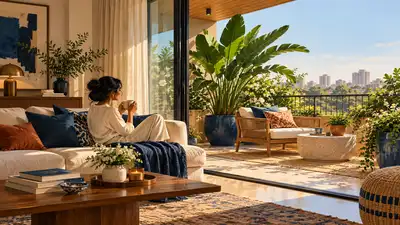
Look at the balcony as a continuation of the living room. (AI generated)
Do not take “indoor-outdoor continuity” too literally. There is a simple design trick that can make a home feel bigger without moving a single wall. Look at the balcony not as a separate outdoor space, but as a continuation of the room it is attached to. The idea is straightforward: take the colours, materials and textures of the living room and carry some of them outside. This isn’t about buying the same furniture for both spaces or creating a balcony that looks like a second living room. Too much matching can make a home feel overly coordinated. OCD much? Plants are the easiest way to soften the transition. Rather than creating a green wall at the far end of the balcony, bring some of the greenery towards the house. A tall palm, ficus, bird of paradise or another large architectural plant placed beside the balcony doors can create a visual bridge between the interior and exterior. The plants also soften the meeting point between the controlled environment of the home and the outdoors. A trailing plant can create the reverse effect, with foliage spilling down from a balcony shelf or hanging planter. The aim is movement, not obstruction. A contemporary living room can accommodate a sculptural outdoor chair. A home filled with natural textures might work beautifully with cane or rattan. A minimalist interior may need little more than a wooden bench and one exceptional plant.
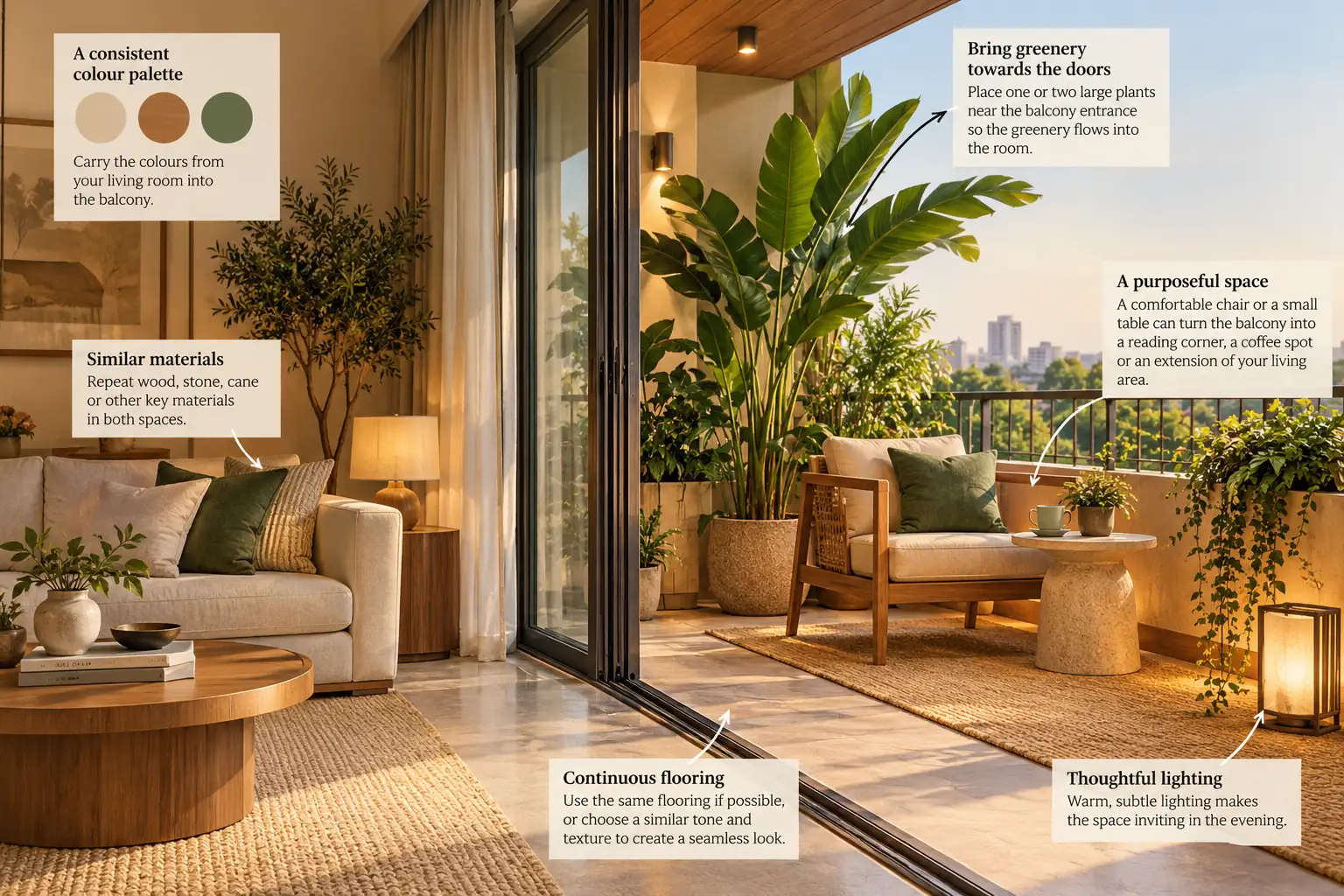
A small balcony may add only a few feet to the physical footprint of a home, but visually it can add much more. When flooring, colours, materials and greenery flow from one space to the next, the eye doesn’t stop as abruptly at the threshold. Perhaps the most useful way to think about this approach is to stop treating the balcony as a destination that needs to be decorated from scratch. Start with the room.