A United States plant explorer tested Japanese kudzu near Washington. Image credits: Wikimedia Commons
The Soil Conservation Service, created in 1935 as a USDA agency and now known as the Natural Resources Conservation Service, tested, praised, and paid farmers to plant kudzu in the 1930s and 1940s, before the ecological cost was counted, as naturalist Bill Finch recounts in Smithsonian Magazine. David Fairchild planted kudzu seedlings around his home in 1902 Kudzu first reached the United States as an ornamental vine in the Japanese pavilion at the Philadelphia Centennial Exposition of 1876. David Fairchild, the plant explorer, had seen farmers in Japan using kudzu for grazing, and in 1902 he planted kudzu seedlings in his garden near Washington, D.C., to see how the plant would behave. By 1907, kudzu hay had been demonstrated in Jamestown, Virginia, a sign of growing interest in the plant as livestock feed. By 1938, he had turned against the plant, and in his autobiography, The World Was My Garden, he recalled firsthand how kudzu covered bushes and climbed pines, smothering them. More than 1.2 million acres were planted after the Soil Conservation Service backed kudzu C. He turned into an avid fan of the crop and planted 35 acres to sell as fodder. The agency distributed more than 85 million seedlings and paid farmers to plant the vine. The farmers were paid to plant kudzu, and more than 1.2 million acres were planted under this federal program. This number covers only the acreage planted under the federal program, not all the kudzu planted in the U.S., and Bill Finch’s reporting in Smithsonian Magazine puts total plantings at a little more than a million acres by 1945. Kudzu ( Pueraria montana ): History, Physiology, and Ecology Combine to Make a Major Ecosystem Threat , published in Critical Reviews in Plant Sciences in 2004, offers part of the answer. In 2007, the team studied soils at three sites in Madison County, Georgia. In invaded soils, net nitrogen mineralization rose by up to 1,000% and net nitrification by up to 500% compared with control soils, and nitric oxide emissions were more than 100% higher (2.81 versus 1.24 ng NO‑N cm⁻² h⁻¹). Under that scenario, soil nitric oxide emissions rose by 28%, and some areas saw up to seven additional days each summer when 8-hour ozone concentrations exceeded 70 ppb. Forest Service survey data from 2010 shows that 227,000 acres of southern forestland contain kudzu, about one-tenth of 1 percent of the region’s 200 million acres of forestland. The Forest Service expects the infested forestland to grow by no more than 2,500 acres a year, while some sources repeat an unsupported figure of 150,000 acres a year. Forseth and Innis (2004) attribute kudzu’s edge to two physiological traits: a fast response to high CO₂ concentrations and little investment in woody tissue.
Because kudzu does not invest in woody structure, this growth boost could make it even more competitive as atmospheric CO₂ concentrations rise. Because kudzu fixes nitrogen, it drives extra nitric oxide emissions from the soil, and nitric oxide feeds ozone formation, the authors point to the southeastern United States as an area of particular concern:.
After confirming with the USDA that the plant was not poisonous, he promoted it as a forage crop through newspaper articles and pamphlets, according to Florida Memory, the Florida Department of State’s archive program. The growth of kudzu is stimulated significantly by increased levels of CO₂, according to Irwin Forseth and Anne Innis of the University of Maryland, College Park. Jonathan Hickman and colleagues showed this in “Kudzu (Pueraria montana) Invasion Doubles Emissions of Nitric Oxide and Increases Ozone Pollution,” published in the Proceedings of the National Academy of Sciences in 2010. Forest Service survey data puts kudzu on about 227,000 acres of Southern forestland Kudzu is often said to cover seven million to nine million acres of the United States, but Bill Finch, writing in Smithsonian Magazine’s “The True Story of Kudzu, the Vine That Never Truly Ate the South,” reports that scientists reassessing its spread found nothing close to that.
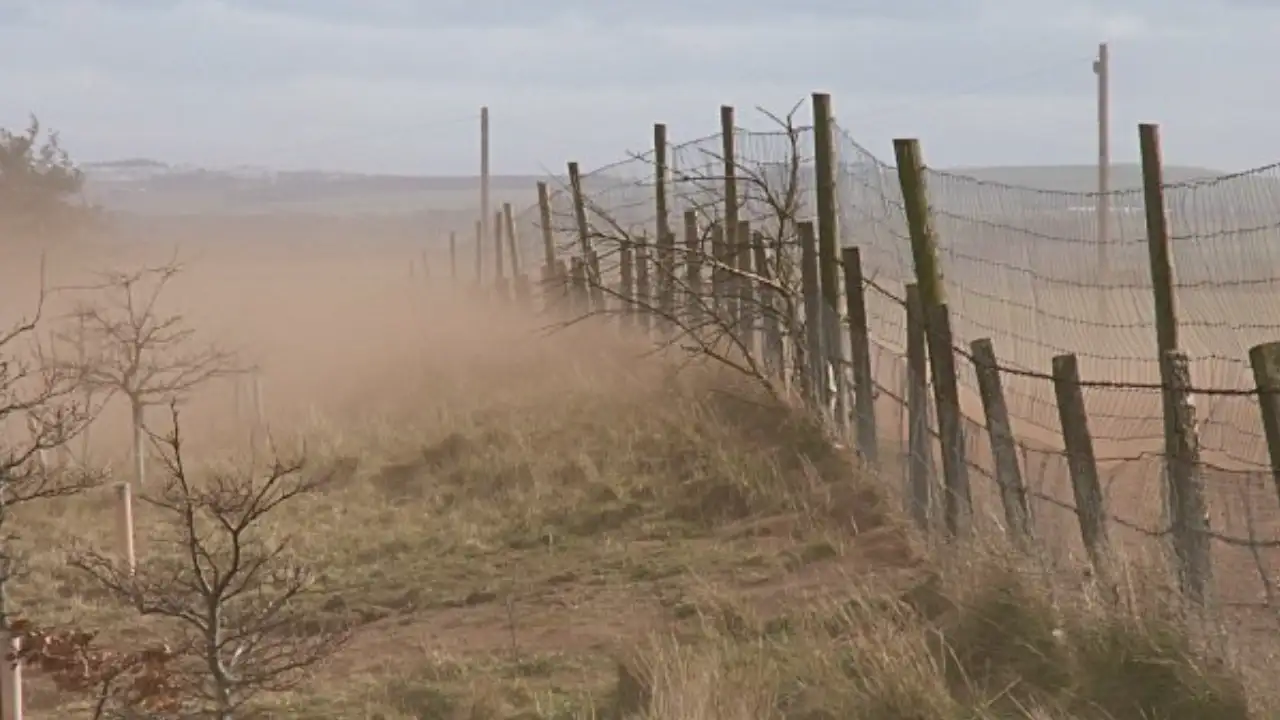
Kudzu was no accident of nature: federal agencies promoted it and paid for it, and the evidence shows an ecological impact that is real but smaller than the legend suggests. A paper from the USDA Forest Service Southern Research Station picks up the story from there. Fairchild, however, grew wary of it. That account reflects Fairchild’s own experience with his experiment, not an official USDA position on kudzu. E. Pleas, a farmer from Chipley, Florida, discovered that livestock eagerly ate kudzu. In the 1930s and 1940s, the Soil Conservation Service promoted kudzu as a means of stabilizing soil in the rapidly eroded gullies of the South, particularly in the Piedmont regions of Alabama, Georgia, and Mississippi. Kudzu’s growth rate rises with carbon dioxide, and it spends little on woody tissue Why did the vine take so well? A fast-growing plant that invests little in woody tissue can outcompete slower-growing rivals. Nitrogen fixation more than doubles nitric oxide emissions from invaded soils The plant also alters the soil it grows in. Only these figures are field measurements. Soil erosion, brownout. Image credits: Wikimedia Commons The researchers then fed their data into the GEOS‑Chem atmospheric chemistry model and assumed an extreme scenario in which kudzu invaded all nonagricultural, nonurban soils across nine southeastern states. These are projections, not measurements. This estimate covers forestland only, so kudzu growing on other land is not counted. The research on kudzu’s ecology helps explain why the plant competes so well. Much of what people say about kudzu’s ecological effects comes from testimony rather than measurement, which is why the Forest Service survey and the studies above matter. It was planted deliberately, its growth habits give it a competitive edge, and its effects on soil chemistry reach as far as the air above it. Its environmental impact is smaller than some legends suggest. You use AI every day. Now get your AI Quotient. Take the AIQ test.