
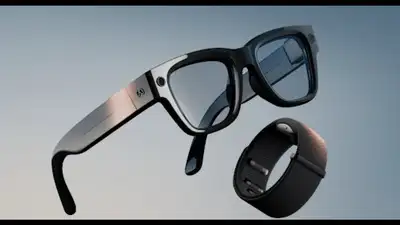
Meta Glasses
Announced at Connect 2026 last week, the Ray-Ban Meta Audio glasses start at $349. Meta introduced safeguards, including updates designed to disable the camera when the recording indicator is tampered with. Sometimes, the smartest upgrade is a missing feature. Meta’s decision to launch AI glasses without a camera could do more to broaden their appeal than another improvement in video quality. For buyers who like the idea of connected eyewear but dislike the baggage of wearing a recording device, there is now a more comfortable proposition. Developed with EssilorLuxottica, they offer music, podcasts, calls, speech translation and access to Meta’s AI assistant, Muse. These are familiar functions, packaged in something people may already wear every day. The camera’s absence is the selling point. Those measures matter. But a light requires people to notice it, understand it and trust that it works. It also cannot establish whether someone has agreed to be filmed.
At $349, Meta still has to justify the purchase. Removing the camera offers a much simpler assurance. Buyers do not have to choose between enjoying connected eyewear and carrying a feature they may rarely use but repeatedly have to explain. There is potentially a sizeable audience for that choice: people interested in calls and music who have little desire to document their surroundings. There are limits, of course. Camera-free does not mean privacy-free. Microphones and AI services still raise questions about what information is collected, processed and retained. Nor will everyone immediately distinguish the audio model from camera-equipped versions. Meta will need clear communication, but it now has a meaningful hardware difference to explain. The stronger commercial argument is that audio may be enough. Many prospective buyers could reasonably want to answer a call, hear a podcast or ask a question without taking out their phones. None of those tasks requires a camera. Removing it makes the proposition easier to understand. Muse will face the same practical test. An assistant that responds reliably and saves time could strengthen the product’s appeal. One that requires repeated instructions will quickly become a feature owners ignore. Music and calls provide a useful foundation while buyers decide how much AI they actually want. Comfort, sound quality, battery life and reliable calling will matter more than keynote promises. Removing the camera also sacrifices visual AI functions and hands-free photography. Those are worthwhile capabilities, but offering a choice recognises that buyers value them differently.